Scott's Blog of Doom!
  • Daily Updates
  • Scott's Rants
  • Headlines
  • Daily Updates
  • Scott's Rants
  • Headlines
  • Observer Flashbacks
  • Mailbag
  • Archives
  1. Archives
  2. 5-Star Reviews

5-Star Book Reviews — page 3

Rants

5-Star BOOK Reviews: Mitsuharu Misawa’s Books, Part XVII

By Alex Podgorski on 13th October 2025

Last time we took an in-depth analysis of Mitsuharu Misawa’s death. This next section will cover perceptions of him and how many of his peers viewed him in the aftermath of his passing. Much of these summaries or views on Misawa will come from a very special edition of Weekly Pro Wrestling which devoted an entire issue to Misawa. Some of the entries included in this magazine were initially published in 2002 based on who was interviewed. It also includes a few comments from Misawa himself about different people as well.

You can read part 1 here, part 2 here, part 3 here, part 4 here, part 5 here, part 6 here, part 7 here, part 8 here, part 9 here, part 10 here, part 11 here, part 12 here, part 13 here, part 14 here part 15 here, and part 16 here.

Mitsuharu Misawa Books

Continue reading
Rants

5-Star BOOK Reviews: Mitsuharu Misawa’s Books, Part XVI (The Death of Mitsuharu Misawa)

By Alex Podgorski on 29th September 2025

“It would be an honor to die in the ring…” – Mitsuharu Misawa.

How prescient.

Much of what I’ve been writing thus far about Misawa has been leading up to this. It’s the most infamous aspect of his wrestling career and indeed his life. In a way it has overshadowed everything he did in the ring and in a weird sort of way it immortalized him as well. For as much as he was a beast inside the ring and looked like someone who could survive anything anyone threw at him, Misawa was, in the end, mortal. And it’s incredibly unfortunate that had to remind us of that in such a shocking way.

Misawa’s demise had been teased piecemeal throughout this book review series. From moments talking about his natural springiness, to moments where he described feeling neck pain, to the last section where he was diagnosed with a spinal injury, there was this unshakeable sense that Misawa was wrestling on a razor’s edge each time he stepped into the ring. That said, Misawa himself mentioned a few times that he understood the risk, that he fought through the pain whenever he could, and that he lived for the moment and didn’t think about the future all that much.

“Even I don’t fully understand the depth of professional wrestling, which is what makes it interesting. The combination of fun and severity is what’s great. That’s why I feel like I want more and more.” – Misawa, THE LAST BUMP

You can read part 1 here, part 2 here, part 3 here, part 4 here, part 5 here, part 6 here, part 7 here, part 8 here, part 9 here, part 10 here, part 11 here, part 12 here, part 13 here, part 14 here and part 15 here.

Mitsuharu Misawa Books

Continue reading
Rants

5-Star BOOK Reviews: Mitsuharu Misawa’s Books, Part XV

By Alex Podgorski on 8th September 2025

This next section looks at Mitsuharu Misawa’s life and career from a slightly different angle. Here I’m going to cover the book DONMAI, DONMAI: A Message From Mitsuharu Misawa, published posthumously in 2010. This is a completely different book from everything covered thus far: it’s basically a collection of bi-weekly blog posts from Misawa’s blog during the 2000s. It’s also structurally different from everything else thus far: a book written in Japanese that reads horizontally left-to-right instead of a normal Japanese book which is right-to-left. The title meant to be a Japanese take on the term “Don’t Mind”/Don’t Worry, with the idea being that if Misawa was speaking casually to the reader in an izakaya to create this sort of two-way conversation and talking about everything and nothing.

For me this feels like a bit of a time capsule or a trip down memory lane because the text here is written in the first person from Misawa’s perspective and he clearly uses 2000s-era internet lingo. For you kids out there, before there were emojis people used to write with things called “emoticons”, like \(^O^)/. Misawa has these terms sprinkled throughout the text which makes it both dated and hilarious. On one hand this book is meant to be more of a casual look at Misawa’s life with lots of talk about everything about being a pro-wrestler aside from the in-ring stuff. On the other hand there’s plenty to gauge from reading between the lines here with Misawa’s comments painting an interesting picture about how things were going for him.

You can read part 1 here, part 2 here, part 3 here, part 4 here, part 5 here, part 6 here, part 7 here, part 8 here, part 9 here, part 10 here, part 11 here, part 12 here, part 13 here, and part 14 here.

Mitsuharu Misawa Books

2005 & 2006

Misawa talks about an October tour and notes he has been getting mail from fans saying he should stick to major cities. Misawa rebuffs this by saying that not everyone can travel so far and he appreciates young children and elderly fans coming to see them when they do smaller shows at local markets.

The tone shifts dramatically as Misawa describes suffering a neck injury in November 2005 when he tucks his head in too much. This injury leaves him struggling to swallow food and water for several days. However, this time he does take time off to heal and dismisses it as simply part of his job.

Two weeks later Misawa suffers another injury, this time in a match with Doug Williams. While in a corner Misawa intended to throw an elbow up but his neck hurt so much he couldn’t turn all the way so the two wrestlers ended up colliding together. Misawa suffers a cut above his eye that apparently bleeds quite profusely so he goes to a hospital immediately after the show ends. Apparently Misawa hates hospitals in general but this time he doesn’t hesitate to go. There’s a bit of a bright spot here as Misawa ends up in Niigata while on tour and is surprised to find a fan/friend bringing him to dinner and there’s Hayabusa waiting for him. This is about four years after Hayabusa’s terrifying injury and by this point he appears to have found some kind of steady work in the music business so at least he can support himself. Misawa is moved by Hayabusa’s resolve despite his physical state and uses that to motivate himself.

Christmas and New Year’s come and go. Misawa suffers a cold towards the end of the year and decides to buy a bunch of DVDs during his time off, including Ocean’s Twelve and a Star Wars box set. He also apparently enjoys Spider-Man 3, Harry Potter, and Die Hard.

We get back to the first NOAH tour of 2006 and by the fourth day (January 12) Misawa experiences pain in his coccyx, which came from the fact that his coccyx has become misaligned. The pain was manageable on some days and not on others, leading him to use painkillers intermittently. Misawa emphasizes that he’s starting to have more days where the pain might reach a point where he might skip competing (APOD: he suggests he’ll appear at a show but not wrestle), but he feels privilege when he can wrestle in front of a crowd without anyone knowing he’s in such pain.

Misawa talks about how he dislikes sunbathing, which is why he’s so much paler compared to many wrestlers. He also can’t sit still even when he’s at home so when he goes to soak in a tub he brings his Game Boy Advance with him. This also sometimes happens when he goes to the toilet and he ends up so engrossed in whatever game he’s playing that he still sits after finishing his business and sometimes his legs get numb from sitting for so long.

Misawa is asked about a match with Takeshi Morishima and Misawa straight up says “I think it’s better for you to actually watch it rather than me talking about it”, which is probably why, even when he was alive, he wasn’t one to talk about this match or that match and preferred encouraging viewers/readers to catch NOAH either on TV or (ideally) live and judge the quality for themselves. On an unrelated note, by March 2006 Misawa talks about going bowling as part of some promotional gig and notes he had a slight dislocation in his left shoulder.

Misawa isn’t the only person getting injured, it seems. He talks about visiting Kotaru Suzuki who was on the injured list having surgery and then while attending a Pro Wrestling SEM event (NOAH’s developmental league), Genba Hiranyagi dislocates his jaw in two places. Go Shiozaki and Makoto Hashi are also still injured around this same time (APOD: This is about four months or so before Kobashi’s cancer diagnosis). Misawa also notes that his house is quite busy: aside from his wife and two kids there are were also three cats, a turtle, and a bulldog.

Misawa also hates Golden Week because he hates crowds and prefers to take a break when ordinary people are working on weekdays. As part of this Misawa notes that when NOAH’s tours end – usually on a Sunday – he drinks from late at night until like 7am in the morning and gets a kick out of going in the opposite direction of all the salarymen rushing to work on Monday morning. He also tells a quick story of how Kotaro Suzuki, fresh from his injury, would drink with Misawa and ramble about nonsense like “humans will eventually live in colonies”.

Misawa also notes that he doesn’t like talking seriously in social settings and veers towards humor. For example at weddings, whereas most people would “cheerlead” the couple of honor Misawa would “bring them down” with his particular brand of jokes.

In May 2006 Misawa describes having to take barium as part of a health check and it caused him to experience a terrible digestive situation. Barium, mixed with a laxative, caused him to become constipated and then when that passed he describes the aftermath as “like a rocket was launching”. Speaking of food and digestion, Misawa responds to many fan letters saying it must be nice for him to travel across the entire country and trying different foods and drinks by describing by noting that he actually spends most of his time in other cities going to the hotel, venue, and gym. And even if he wanted to try new foods he wouldn’t usually have that luxury since most of those places would be closed once he was done wrestling that day (APOD: I can attest to this from personal experience. For anyone contemplating visiting Japan, be advised that many restaurants, bars, and izakayas do not operate on the same open-till-late schedule. Many open for lunch, close in between, and reopen for a few hours in the evening. Lots of places have last call at 10pm. Really, most of the late night spots are concentrated in Ginza, Shinjuku, Roppongi, and Kabukicho, at least as far as Tokyo is concerned. You might find a chiller drinking atmosphere in Osaka, though). While on tours Misawa describes having maybe one day off if he’s lucky: most of the time he goes straight back to the hotel or to the bus for an overnight ride to the next destination. He also warns anyone seeking to become a professional wrestler to make sure they’re not easily prone to motion sickness because that might be a problem for you if you do.

Unfortunately, the ghost of the “Ace of Glass” returns as throughout 2006 Misawa describes collecting more small injuries. A cracked ligament here, an injured right shoulder there. An X-ray shows that one of his bones, which is supposed to be round, is deformed and pointed. As a result Misawa finds it difficult to wipe during this period. But he balances out that brief bit of toilet humor with very real, very serious practical consequences of wrestling on everyday life:

“If you fracture your elbow or shoulder and can’t use your dominant arm, it’s really inconvenient. By the way, when this happens, it’s easier to eat with a fork. The tough part is the bath and, of course, the toilet. When you have an injury, you can’t warm it up most of the time, so you can’t even get into the bathtub. If you injure your neck, you have to support your head with one hand while washing with the other, and even a little pressure can hurt. When I injured my knee, of course, I couldn’t use a Japanese-style toilet. When I hurt my back, it was tough because I couldn’t brace myself. If I try to brace myself, I get a sharp pain in my back. ”

Misawa talks about the outdoor wrestling shows which he generally doesn’t like but does them out of duty to NOAH. He talks about some places having no showers so, during August when Japan is at its hottest, he recalls wading into a makeshift kiddie pool to cool off after wrestling, only to find the water ice cold since they were in the mountains. A few entries later he describes catching another cold, which becomes a fever, yet he still wrestles in matches and attends parties for people that’ve helped him out.

In a completely random tangent Misawa provides dating advice for readers and connects the present (APOD: Okay, so late 2006/early 2007, when these early entries were written) with how nervous he was during his teenage dating years. Misawa recommends going to a zoo or an aquarium since amusement parks can require tons of walking and being able to handle thrill rides. He also strongly emphasizes having a look on your face that makes you look relaxed, even if you’re not on the inside. On a related note, Misawa doesn’t particularly like Christmas and suggests that the season is better for women and children than it is for men due to travel and gifting arrangements. Another reason he dislikes the season is year-end parties and other “obligatory functions” in which he has to drink in a social setting in which he might not be fully comfortable. But if he has duties to others, those come first. He also uses this opportunity to thank people who make the trek to DIFFER Ariake for NOAH’s annual Christmas show, which he is especially proud of.

2007

Misawa opens with what appears to be a match in which he suffers a concussion. He suspects a ringside powerbomb is the culprit and this time he notes it’s the first time he has completely lost his memory of a major event. He has to go to the hospital in an ambulance (two things he hates), and then states the last time he went to the hospital right after a match was when he broke his nose in a match with Tsuruta and had to work the next day. He doesn’t go into it further but there’s an underpinning of “another injury but I still have to continue” throughout this section.

On the subject of injuries Misawa describes a sort of duality with how his body heals. On one hand when it comes to minor injuries like cuts, bruises, bleeding, and small tears he notes that while he tends to get these often he heals pretty quickly. On the other hand Misawa’s bi-weekly posts keep opening with him talking about his neck and back. He describes being unable to sleep due to the pain on some entries. Though most people seem to notice and worry about his more visible injuries, Misawa himself is more concerned with what cannot be seen, especially with his neck. He does everything he can to hide these issues from others, even in these blogs, as he shifts the conversation to something completely unrelated like cars or his pets. He also recalls getting hooked on Yoshi’s Island for the DS when he’s unable to sleep or in the bathroom. “After big matches, my body aches in every joint. It can’t be helped, but it’s a tough job”, notes Misawa. He also notes that, at this point in his life and given condition, when asked what his hobbies are Misawa replies, “Napping”.

After lots of rambling about weather, colds, and washing machines, Misawa briefly mentions his trip to New York in 2007 for a Ring of Honor show. This would be, of course, ROH Glory by Honor 2007, in which Misawa defended the GHC Heavyweight Championship against KENTA. Misawa puts KENTA over on the blog, admiring him for working hard, and understanding KENTA’s challenges in being a junior facing full-fledged heavyweights. He also sidetracks to mention his first impression of his hotel room in Philadelphia and how spacious the room is, though he’s surprised to find no ashtray in his room (APOD: This is probably the first time anyone mentions Misawa’s smoking habit. It might not be all that big of a deal in the grand scheme of things that is the picture of Misawa’s health, it’s another attribute that you can add to the list of things that was making Misawa’s overall condition worsen as the decade wore on). Apparently Misawa was trying to find the location where Rocky was filmed but couldn’t find it and at the ROH show apparently Nicolas Cage was there but the NOAH guys didn’t get the chance to take photos with him. Once again Misawa says nothing of his match with KENTA or anything particular about the event but does still take the time to say thanks to the ROH fans in Philadelphia and New York, even if they won’t read this diary.

Misawa closes 2007 talking about the brutally difficult travel in Hokkaido given how much it snows up there (APOD: for you travelers out there looking to see a part of Asia that’s closer to the wilderness of Canada or snowier parts of the United States, Hokkaido’s your best bet) and some of his biggest moments. He feels proud of defending the GHC world title in the US, is thankful for everyone who came to support Kobashi’s return on December 2nd, and then tells a story of his trainee Ippei Ota, a frequent target of jokes in these diaries, botched copying one of Misawa’s signature moves on a SEM show which made Misawa burst into laughter.

2008

Misawa opens the New Year and once again he gets sick from a cold passing around the NOAH dojo. This time, however, he also experiences gastroenteritis but then lightens the mood by describing how he can’t tell the Briscoe Brothers apart unless their mouths are open and he can see that Mark is missing some teeth.

Then in March there’s a major development: Misawa opens by saying he can’t move his neck. After his Budokan match he goes to the hospital to get a CT scan of his brain and an X-ray of his spine. The tests show no issues with his brain but do note that his cervical spine is sprained, which Misawa describes as being ten times worse than “normal” whiplash. It’s here that Misawa describes experiencing pain when brushing his teeth and washing his hair, which other sources have attributed to him developing osteophytes. Misawa tries to smooth things over with this announcement, saying “I’ll hold my head with one hand while brushing my teeth” and that he’ll do his best while feeling uncomfortable. (APOD: It’s at this point that Misawa really should’ve considered quiet retirement from in-ring activity. His body was fast approaching the point of no return but due to falling business and mounting pressure to take care of all the NOAH wrestlers, staff, and their families, he kept going).

Two week later and Misawa’s neck is still hurting. Misawa waxes philosophical for a moment, talking about appreciating his health and not taking being healthy for granted. If he gets better Misawa expects he’ll repeat the same cycle of forgetting and repeating, attributing this to human folly. In the next entry he notes he knows his neck won’t ever fully heal due to years of accumulated injuries, but at least for the moment he seems to be recovering enough ahead of the next tour. Then in April he twists his left knee; although it isn’t a major injury, Misawa does describe feeling “extreme pain” from it. From a business standpoint Misawa also addresses questions about why NOAH doesn’t have a league/tournament like New Japan’s G1 or All Japan’s Champion Carnival. Misawa attributes this to wanting his wrestlers to give their all in every match and not wanting his wrestlers to feel added pressure in “official” matches which could lead to wrestlers working through injuries or possibly aggravating lesser ones.

In April 2008 Misawa has a match with Bison Smith and takes his finisher the Bisontennial (Styles Clash) which hurts his chest. Misawa is harsh about his own performance in this match and apologizes for “going home” sooner than expected and rushed to the finish because of how much pain he was in. come May his ribs are better but his knee is still giving him problems. Later that month he finds himself in the Coventry Skydome for an event and recalls a delay from the staff managing event. Misawa describes having to stand and then sit down over and over as part of the event as akin to performing slow Hindu squats. Then there’s the actual match which Misawa admits that he definitely wasn’t in perfect condition for. That said, he’s grateful to the Coventry fans (APOD: There might be a factual mix-up here: Cagematch has a report on an event in May 2008 called ‘NOAH vs. UK’ which took place not in Coventry but at the Farington Leisure Centre in Oxfordshire. That show was headlined by Misawa & Kotaro Suzuki facing Bison Smith & Mark Haskins and is said to have drawn 300 fans. Misawa also notes that there was a second event the next day but there doesn’t seem to be any digital record of it) and says to the fans who attended:

 “Although I don’t think it will reach them, thank you to everyone who came to watch (hat tip)ノ”

And then…well, there isn’t much of note from then on. Most of what he writes from June to September is pretty mundane: no new injuries, no seasonal illnesses, and no major developments either in his life or in NOAH. There’s a brief note about Misawa being worried about the state of the economy going into 2009 but there’s nothing further. Then there’s an epilogue from special publisher Rika Kayama, who put this book together to shine a positive light on Misawa’s life in the aftermath of his sudden and tragic death in 2009.

APOD: If you want to find more of Misawa’s diary translations you can visit the NOAH Arkive blog managed by superfan Hi5ame. For me though this book was an interesting change of pace as it was filled with a more casual look at Misawa’s life. It is true what many sources have said: that Misawa was extremely private and didn’t talk about himself all that much. Even in these diary entries Misawa keeps things casual about himself but doesn’t take a deep look at his own life or talk about his wife or children. That stuff is saved for other places. The stuff I’ve included in this entry is what I think would be most interesting for you to read but to be honest I had to skip through A LOT of repetitive and relatively boring content that I don’t think most of you would care about. Stuff like weather, in-jokes that probably get lost in translation, and some mention of other NOAH wrestlers’ blogs that feel like they’re part of the story yet aren’t quoted or explained. That said, this book has some incredible insight into Misawa’s firsthand experiences during the final years of his life. Like I mentioned above the Ace of Glass returns and Misawa collects more injuries at a time when he should be far more careful. This concludes with his cervical spine injury and I don’t know what’s more terrifying: Misawa’s description of the injury and its consequences, or how he more or less fights through it when his body is screaming for him to retire already. There’s a brief note here about him doing some sort of speaking engagement but there’s no indication that he finds a new career path there.

Final Rating: ***3/4

All in all this is an interesting book as most Japanese books are, but there are better ones out there for wrestling fans to enjoy. That said, Misawa was very much thankful to anyone and everyone who came to see him wrestle when he was abroad, so to those who attended Ring of Honor in 2007 and two UK shows in 2008, know that Misawa appreciates you showing up to cheer for him.

Thanks for reading. Next time, we look at the tragedy that all of this has been leading to: the death of Mitsuharu Misawa.

Rants
Rants

5-Star BOOK Reviews: Mitsuharu Misawa’s Books, Part XIV

By Alex Podgorski on 19th August 2025

This next session of Mitsuharu Misawa’s books is going to be a bit all over the place as it covers more from Ryu Nakata’s perspective. As Misawa’s right hand man, Nakata was deeply involved in NOAH’s creation and management, and his insight is highly useful in addressing things that Misawa himself may not be willing to. His perspective is also important in that he helps discuss the management and financial side of things for NOAH while leaving the in-ring stuff to Misawa. Understanding the business side of things is useful because it helps frame Misawa’s decisions on in-ring style and content. And as we get closer to 2009 – which is when things reach their absolute nadir – it’s important to understand how events proceeded bit by bit. When it comes to Misawa’s own ideas during the NOAH era I’ll cover those at the very end in his book IDEALIST which is far more theoretical, philosophical and, as the name suggests, idealistic on how things ought to be in wrestling, at least from Misawa’s perspective. Until then, though, let’s look at some of the things that Nakata recalls and how they shaped NOAH’s early history.

You can read part 1 here, part 2 here, part 3 here, part 4 here, part 5 here, part 6 here, part 7 here, part 8 here, part 9 here, part 10 here, part 11 here, part 12 here and part 13 here.

We begin this section with Ryu Nakata talking about various challenges he endured in setting up NOAH alongside Misawa, along with some expansion on topics Misawa himself either started but never expanded on or never finished. Nakata recalls Misawa being exceptionally hurt by one fan at one of Misawa’s last All Japan shows loudly calling him a “traitor”, to the point that Misawa addressed it to the press. Nakata noted that even during the late 1980s and throughout the 1990s there was no such thing as jeering from the fans, so any such negative response from the crowd stood out (APOD: either Nakata is misremembering things or he thinks there’s a difference between jeering and booing because there absolutely were cases of AJPW fans booing wrestlers during matches. Maybe not out of legitimate hatred/XPAC Heat but still booing could be heard all the time from the fans, especially in big titles matches or if Akira Taue was involved). Speaking of All Japan, Nakata comments that in the wake of the NOAH Exodus AJPW filled out its skeleton crew of a roster with people from places like Michinoku Pro, Fujiwara-Gumi, BattlArts, and indie groups, and commented that this went against the previous high threshold the company held when it came to bringing in outside talent. He also speculates that, had AJPW not done this and kept it to the remaining handful – Kawada, Fuchi, Mossman – then it’s possible AJPW’s core fans would’ve supported them more which would’ve made things tougher for NOAH. He also recalls some comments made by “Dr. Death” Steve Williams about wanting to crush Misawa; however in his own book Doc describes this as wanting to stir up interest in a possible clash down the road. He essentially “goes into business for himself” (though not out of malice) but nothing comes of it.

Then came pressure over NOAH’s inaugural Departure show in August and Nakata recalls everyone involved feeling extreme pressure; not only financially but stylistically. Given the shocking and dramatic nature of the split there were many fans who were expecting an equivalent shift in in-house style and presentation. But Nakata, Misawa, and those in their inner circle didn’t see it that way:

“Just because All Japan split into two, it doesn’t mean the former All Japan wrestlers could suddenly do something entirely different. You can’t suddenly do something different from yesterday to today. Honestly, for us, the intention was to keep the All Japan style and make minimal changes, like enhancing the production and presentation as much as possible. But we could sense that people around us were expecting something significantly different. That made us feel like we had to make major changes. In reality, after the inaugural event, there were voices saying, ‘What’s this? It’s no different from All Japan.’ But that’s just how it was.” – Ryu Nakata

Nakata echoes the comments made by Misawa’s wife Mayumi about the company willing to take a loss on the opening show and spending on their long-desired production and presentation changes. Nakata insists on making first impressions matter by spending a lot on the opening show and then reducing the level of luxury thereafter since there were so many debts to pay. Nakata also dedicates quite a bit to discuss the importance of adding laser beams to production, noting that it was something he had been wanting to have seen in wrestling for decades. He had asked many times before only to be shut down because they were so expensive. Nakata cites his obsession with adding laser beams to entrances comes from a singer/songwriter named Seiko Matsuda, whose concerts he got to attend thanks to his connection to someone in the music industry. Nakata, not necessarily the biggest fan of the live entertainment in question, got to go to a concert he wasn’t all that familiar with/excited to see and saw the live production people using lasers to draw letters and pictures of animals on the ceiling of the Budokan. Enraptured, he proposed this many times to AJPW higher-ups, only to get rejected.

(APOD: Nakata’s comments here go hand-in-hand with Misawa’s previous comments about All Japan running in the Tokyo Dome. Though it is still impressive that Misawa and company were able to draw such a big crowd on the strength of their in-ring skill alone, Misawa has made it very clear he didn’t want to run such big venues if the fan’s experience would weaken. He wanted the fans in the cheap seats to have something to enjoy, which was difficult when the All Japan production entered the dome in 1998 with visuals and equipment still out of the 1970s or 1980s. It’s no wonder that Misawa felt so hamstrung and frustrated come 1998: it’s like he was trying to promote what he did solely through radio with his bosses not knowing the meaning of the song Video Killed The Radio Star).

On the same note Nakata notes that both he and Misawa got to realize a dream by including a flower path (entrance ramp) at their events after it was routinely rejected in All Japan. Nakata believes that wrestling fans place heavy emphasis on entrances (APOD: This is more of a wider trend but in from Misawa’s point of view in IDEALIST he notes it’s not as important in Japan compared to elsewhere, though he doesn’t dismiss it’s importance completely), and most other wrestling companies understood this since basically every promotion used one except All Japan.

There was also another important note regarding NOAH’s opening show: by installing a huge outdoor screen to satisfy fans who couldn’t get into the venue NOAH was able to get some new sponsors. Nakata specifically sites someone from a company who watched on the screen in the parking lot and this person would, a few years later, help NOAH’s wrestlers go on a tour of Korea. This same person also set in place a retirement program for NOAH’s wrestlers that would see them engage in, for instance, restaurant management, as a means of supporting themselves after their in-ring careers ended.

Nakata then goes into a key business difference between All Japan and NOAH: the revenue stream from merchandise. All Japan under the Babas had these revenue streams separated entirely with the money from merchandise sales going into one of the subsidiaries (likely Giant Services) managed by Shohei and Motoko. In NOAH these numbers were combined under one balance sheet which allowed NOAH to budget far more easily. (APOD: This also likely allowed some wrestlers to breathe a huge sigh of relief since they likely no longer had the psychological pressure of thinking “my only way of making money is through wrestling”).

After the two-night Departure event, NOAH’s next show takes place in the middle of nowhere in a small village called Minase in Akita several hours north of Tokyo. This ends up being a free outdoor show at a campsite (APOD: Nakata’s book states that Minase had a population of 3,200 but people from other nearby villages also came to the show, leading to an estimated 6,100 people attending, 1,200 more than the previous year’s AJPW show at the same venue), which Nakata states was organized out of honoring offers from anyone who would offer. In the case of Minase, they had previously held joshi and FMW events in the past and they had approached Misawa shortly after the announcement of NOAH’s formation to host an event. In fact, this Minase Village show was decided before NOAH was even registered and Departure 2000 was organized backwards from this show. To further emphasize how important this was, Minase, which can best be described geographically as a small mountain town in the middle of nowhere with the nearest major city, Sendai, being a good two hours away, had fans young and old come from all over to see the NOAH show. And to bring everything together, Nakata notes how the show ended with a fireworks celebration under the night sky.

NOAH, like All Japan, would embark on regional tours as a means of keeping ties to established fanbases, even though it was well established that these regional tours under All Japan rarely turned a profit. However, Nakata and a close ally Haruka Eigen worked to obtain critical assets for the company, namely trucks to carry the ring & other equipment and buses for the talent. However, both were expensive: each bus cost ¥25,000,000, the equivalent of a house. They considered leasing buses instead but that required financial statements which the newly-founded NOAH didn’t have. Thus their only solution was to charter/rent tourist buses, which were cheaper but came at the cost of being slower, extending wrestlers’ travel time between cities. That is, until Misawa made an executive decision: he was able to procure two brand-new buses with a combined cost of ¥60,000,000.00 by negotiating with a supporter who was a big fan of the Four Heavenly Kings era of All Japan. a year later this same person would help NOAH procure a third bus, giving the company a total of ¥85,000,000 worth of assets.

(APOD: Imagine being such a great wrestler that a fan of yours willingly contributes almost one million dollars’ worth to help your wrestling start-up survive its critical first year of operation).

The stress continued for NOAH into their next big show, which was Great Voyage in Ariake Colisseum on December 23, 2000. According to Nakata everyone went into this show with a do-or-die attitude, noting that they were borrowing money from various places to pay off one debt or another. Though the owners of the venue had never seen 12,000 people in the venue, a large crowd alone wasn’t enough to calm people’s nerves.

The headlining match for that show was a big showdown between Kenta Kobashi and Jun Akiyama (APOD: a solid classic, ****3/4 at least, highest recommendation possible), but arguably the bigger story was the appearance of NJPW’s Shinya Hashimoto on the undercard. Nakata recalls a secret meeting taking place in March of 1999. This meeting, arranged by Hiroshi Hase, featured Misawa, Kobashi, and Nakata on one side and Hashimoto, Muto, and Chono on the other. The purpose of this meeting was to foster collaboration between the Four Heavenly Kings and the Three Musketeers of Fighting Spirit (APOD: some details of these talks were documented in a 1999 book called “Fetal Movement: A New Century of Professional Wrestling Theory” which includes a sit-down discussion between Misawa and Chono). One of the earliest discussions was for NOAH to be used as a vehicle to rebuild Hashimoto as he struggled to rebuild his image following the January 4 incident with Naoya Ogawa. However all of these secret talks ended inconclusively due to either a lack of management involvement on the New Japan side or a general sense of unease or untrustworthiness by the All Japan side that wouldn’t thaw until around the time Baba passed away.

Nakata’s book shifts back to when he and Misawa first met. Though they were the same age Nakata was one academic year ahead and was already working in All Japan’s ring crew when Misawa joined, having started when he was in 8th grade. They didn’t hit it off from the start: Misawa thought Nakata was weird and annoying while Nakata thought Misawa was another one of the MANY rookies who would quit within his first year. However, they started getting along when Nakata started attending wrestlers’ training camps to observe them learning. As an aside, there’s a quick story where Fuyuki once went to a local butcher shop to pick up some meat for the dojo and the lady there asked why Misawa wasn’t there. She then stated “Misawa-san is wonderful. That boy will become a star someday”. When Fuyuki asked her, “what about me?” she curtly responded, “no, you’re no good”.

Nakata also recalls the three of them – himself, Fuyuki, and Misawa – developing an almost sibling relationship, to the point that Misawa & Fuyuki would accompany Nakata when he’d go visit his girlfriend at her parents’ house. They’d eat with the parents downstairs while he’d spend time with her. Nakata also recalls staying at the All Japan dojo as a guest (he didn’t live there) and when he did they’d make room for him by dragging Toshiaki Kawada’s futon out into the hallway. “I was always made to sleep in the hallway” laments Kawada. There are also some funny stories about the training dojo – a rundown building owned by Jumbo Tsuruta – having its ceiling collapse one summer and its bathroom floor caving in when Haku used the toilet.

Nakata and Misawa likely warmed up to each other because they shared a common background of smaller men in a big man’s world. As the smallest kid in his class, Nakata knew he would never become a wrestler but the ring crew appreciated his help when they ran shows nearby and his parents ran a soba shop and he’d bring them food after helping with the ring. When it came to him becoming a ring announcer, Nakata recalls received support from Haru Gunju, a relative of Keiko Tanaka, the wife of Rikidozan.

There’s also a quick aside: Nakata confirms that it was Sato, Baba’s close personal aide, who gave trainees like Misawa the freedom during training because he achieved more success in America despite being smaller.

“Sato allowed young wrestlers to do anything, and as a result, they could fight freely, leading to the creation of the Lou Thesz Cup and later the Asunaro Cup (a league for young wrestlers). That’s definitely true. Until then, young wrestlers had not been in the spotlight, but Sato changed that and made the preliminary matches in All Japan interesting. I still think Sato is the most wonderful among professional wrestlers.”

But this freedom came at a cost. Nakata, who watched Misawa’s matches closely and expressed concern over how his matches unfolded:

“The battles of the Super Generation Army, which directly confronted the overwhelming strength of Tsuruta, Hansen, and others to create a new era, gained enthusiastic support from fans and became a powerful driving force for the revival of All Japan. The Super Generation Army’s intense fights evolved into the “Four Heavenly Kings Pro Wrestling” woven by Kawada, Kobashi, and Taue (with Akiyama later joining). Day after day, in any local venue, their relentless fighting style, which involved a dangerous exchange of techniques, was extremely harsh, surpassing the limits of intensity.

“Whether it was Korakuen Hall or a local venue, the matches were literally life-threatening, and I genuinely felt sorry… There were parts that were hard to watch. For example, in boxing or kickboxing, if someone falls, it can end there. They don’t have to suffer further pain afterward. But in pro wrestling, they are dragged back up and still have to continue. They are forcibly lifted and made to fight. I was watching, thinking, ‘Please stop it already.’ They were doing that every day. It was quite painful to watch.”

Nakata could only hold his breath at the harsh battles unfolding by Misawa and others. “Baba also acknowledged that what we had been doing was different. It was something completely new, probably. Misawa was leading the way. When you see that, everyone else naturally tries harder. He’s not someone who complains. He won’t say he needs a break. He does things that make you think, ‘Is this even possible!'”

The extreme fighting style of Kawada, Kobashi, and others, who fought to their limits, left even Baba speechless. While the Super Generation Army and the Four Heavenly Kings became the mainstay, Baba had not yet considered handing over All Japan to them. Baba believed, “Ultimately, it won’t work without me.” He thought that without his backing, All Japan would be preyed upon by untrustworthy individuals in the wrestling world, and he felt it was his duty to prevent that. Baba intended to continue as the support behind All Japan.

The extreme pro wrestling practiced by Misawa became the foundation of NOAH’s wrestling.”

And yet Nakata couldn’t deny that this style also yielded immense financial success for the wrestlers on top of its critical success, noting that All Japan profited more from the Four Heavenly Kings Era than New Japan did during the original Tiger Mask era:

“The popularity of the Super Generation Army surpassed that of the original Tiger Mask. The Super Generation Army not only became the savior of All Japan but also brought significant economic prosperity to the promotion. “It was incredible. Everywhere was packed to capacity, with bonuses and allowances. There was a time I received a bonus of 5 million yen. It truly was a Super Generation Army bubble. The popularity of Terry Funk before that was also great, but this was about three times as amazing. In the past, the annual broadcasting rights fees were, at their peak, around 600 million to 700 million yen, and we were making a profit… When we were airing during prime time, with people like Wajima and Choshu, there were also many payments to Japan Pro Wrestling, so there were questions about how All Japan was doing.

During the Super Generation Army boom, pre-sale tickets were selling like hotcakes at any local venue. It was common for a single event to generate 10 million yen just from ticket sales. Occasionally, if an event only made 8 million yen, other sales staff would be astonished and say, “What? Your place didn’t reach 10 million!?” There were even enthusiastic fans who would call the office every time the series schedule was announced to reserve pre-sale tickets for almost all venues in bulk.”

Nakata ties this bubble period to the wider economy, which began to pop, plateau, and then slow down from the mid-1990s onwards. There was no immediate effect on AJPW’s bottom line but attendance at local shows dropped significantly towards the middle of the decade and in some cases merchandise sales were cut to a quarter of bubble year levels. Fans still attended shows but stopped buying merchandise. NTV continued to back AJPW throughout this period and in some cases provided sponsorship money for foreigners arriving for big tours. But by 1996 the real Four Kings Bubble burst and that forced everyone to tighten their belts, including Nakata who had to take on additional roles such as that of a truck driver and merchandise handler.

Nakata shifts back and notes that NOAH started doing special themes Christmas shows on December 24th. The cards and other elements to these shows were usually decided by fan vote as Misawa placed a heavy emphasis on fan engagement and satisfaction. As such, wrestlers would learn their matches for these shows from reading fan results and they’d adopt Christmas-themed messaging on their gear (APOD: or in Misawa’s case, red tights). Sometimes the wrestlers would do Japanese renditions of Christmas songs and carols, such as “When You Wish Upon A Star”, which apparently has significant deeper meaning for Nakata because the lyrics contained Nakata’s heartfelt wishes to the fans. He concludes by noting that these Christmas themed shows would escalate…but in terms of fan support and not anything negative. Mirroring the escalation of the in-ring style, the NOAH Christmas videos would increase in anticipation and thus needed to get bigger. At one point NOAH created a character named “Mr. Sanpachi”, based on a school drama, and they’d spend an entire day filming what was supposed to be a lighthearted Christmas story.

As the years went on production for these events also increased, putting more strain on an already thin company budget. To really hammer home just how high these expectations got, at one point NOAH’s management floated the idea to bring Chosuke Ikariya to do a holiday appearance. Ikariya was once a hugely popular comedian on the TV show “It’s 8 o’clock! Everyone Gather!” which, if you’ve been following these book reviews, is the same longstanding series that guys like Kobashi and Kawada watched as children. Talks took place to get Ikariya to NOAH for their 2002 Christmas show and Misawa’s side offered an amount that “wouldn’t be rude to offer” given their budget but talks stalled not because of money, but because Ikariya fell ill. In May 2003 he was diagnosed with cervical lymph node cancer and within a year it metastasized, leading to his death in March 2004. Since he passed away Nakata never got to realize his vision of a Christmas show, which would’ve looked like this:

“If Ikariya’s appearance had been realized, it is possible that Kobashi, being called by Ikariya, would have donned a swan neck on his lower body and passionately sung the Higashimurayama Ondo, creating an unimaginable scene.”

(APOD: Since we weren’t able to get that vision, here’s the next best thing: a collection of NOAH Christmas videos that includes, among other things, Misawa being wholesome as he delivers presents to kids dressed as Santa Claus and Kobashi showing off his natural blonde hair)

APOD: There wasn’t all that much wrestling-related in this section and it was more focused on the operations end of things. That said, it’s still interesting to see how NOAH ran as a business and how some longstanding issues going back to the All Japan days affected NOAH’s formation and initial operation. Never forget that Misawa had to don the manager’s hat in All Japan in sudden fashion with minimal (read: nonexistent) experience and following the Exodus he became a business owner via baptism by fire. Nakata played a key role in taking on some important responsibilities and his insight into something we as fans might not think are big deals – arranging travel, show bookings, buying buses – gives a small window into the kinds of business decisions actually go into a wrestling promotion. I don’t know how many of you as fans have ever daydreamed about what you’d do if you had the money to run your own wrestling promotion but I can imagine most of you would be thinking about which wrestlers you’d sign and the matches you’d have. The less exciting – but still important – practical side of things might not’ve been on your mind in those moments of imagination, but luckily Nakata’s recollections here help give a better understanding of what life was really like as the key operations manager for a wrestling company trying to rub two nickels together to create a dollar.

Thanks for reading.

Rants
Rants

5-Star BOOK Reviews: Mitsuharu Misawa’s Books, Part XIII

By Alex Podgorski on 12th August 2025

Before we continue our progress into NOAH I wanted to close as much as I can so I’m starting by finishing up the biggest books used so far here, Kagehiro Osano’s Supreme Triple Crown Champion Mitsuharu Misawa. This was an extensive volume that went into great detail on Misawa’s in-ring career and helped set the tone for Misawa’s shift from in-ring ace to head booker. As we go from Misawa’s time in AJPW to NOAH we will be shifting to other books that were started or cover the period from 2000-onwards. To that end, let’s look at the final part of SUPREME which covers the epilogue from 1999 to mid-2000, briefly touches on NOAH, and addresses some issues that Misawa dealt with during his time away from the ring ahead of his Exodus.

You can read part 1 here, part 2 here, part 3 here, part 4 here, part 5 here, part 6 here, part 7 here, part 8 here, part 9 here, part 10 here, part 11 here, and part 12 here.

Mitsuharu Misawa Books

Continue reading
Rants

5-Star BOOK Reviews: Mitsuharu Misawa’s Books, Part XII

By Alex Podgorski on 28th July 2025

Last time we looked at Mitsuharu Misawa’s situation he was about to captain his ark into a maelstrom. He left All Japan Pro-Wrestling suddenly and under acrimonious circumstances, no longer able to continue dealing with constant refusal from Motoko Baba. Frustrated with arguments in the boardroom and uncertainty over AJPW’s finances, Misawa left to form his own company. But instead of having a manageable number of followers on his ark, Misawa and his right-hand man Ryu Nakata ended up having way more people aboard than what he had room for.

You can read part 1 here, part 2 here, part 3 here, part 4 here, part 5 here, part 6 here, part 7 here, part 8 here, part 9 here, part 10 here, and part 11 here.

Mitsuharu Misawa Books

Continue reading
Rants

5-Star BOOK Reviews: Mitsuharu Misawa’s Books, Part XI

By Alex Podgorski on 16th July 2025

So now that we’ve established that Mitsuharu Misawa was hamstrung in his ability to change All Japan, this next section covers how he tackled this dilemma. It’ll cover the background over how his new promotion, Pro Wrestling NOAH was formed, and why so many people chose to follow him. And just like last time, we’ll be relying on a few satellite viewpoints as well: Ryu Nakata, Kyohei Wada, wrestlers who became friends with him, and a few other backstage officials as well.

Furthermore, in translating all of these books and magazines I’ve uncovered something that, to be honest, I’m flabbergasted hasn’t been uncovered already by someone like Meltzer or some other wrestling historian since it shakes the very understanding of how events took place during one of the most tumultuous periods in modern wrestling history.

You can read part 1 here, part 2 here, part 3 here, part 4 here, part 5 here, part 6 here, part 7 here, part 8 here, part 9 here, and part 10 here.

Mitsuharu Misawa Books

Continue reading
Rants

5-Star BOOK Reviews: Mitsuharu Misawa’s Books, Part X

By Alex Podgorski on 30th June 2025

This next section of Mitsuharu Misawa’s books is the murkiest so far as it covers the background that leads to his Exodus and the formation of Pro Wrestling NOAH. There’s lots of background information to cover and some important players, previously either ignored or relegated to ancillary figures in his career, come to the fore. There’s Giant Baba himself who starts delegating authority to Misawa that the Emerald Emperor previously didn’t have. There’s his wife Motoko, who goes from being a doting adoptive mother to the mother-in-law from Hell. Then there are the two Baba family handlers in Kyohei Wada and Ryu Nakata. Wada’s name has appeared a few times already in these reviews as both a firsthand witness to the Four Heavenly Kings’ in-ring greatness and as a close confidant of the Baba family. Although he has remained close relationships with the Four Kings wherever possible he is, at the same time, an unwavering Baba apologist. The other handler in question is Ryu Nakata who is Misawa’s close friend and another important person in dealing with Baba’s business. However, unlike Wada, Nakata was able to distinguish Shohei from his wife and stuck with Misawa more than he did the Baba family. These individuals’ perspectives will help us navigate the difficult waters ahead, especially as they shine new light on the events that lead to Misawa’s history-changing decision.

Continue reading
Rants

5-Star BOOK Reviews: Mitsuharu Misawa’s Books, Part IX

By Alex Podgorski on 23rd June 2025

This is the longest individual segment that I’ve written so far about Mitsuharu Misawa because it covers many important developments. As had been teased in the previous segments Misawa and his peers were getting increasingly drained from the stylistic demands of the in-house style with either plateauing or reducing payoffs. Business was mixed and there was growing reliance on the matches themselves to create buzz. These problems began to show in earnest through 1997 and 1998 as Misawa in particular is put through the wringer by spending almost 450 days as Triple Crown Champion after wrestling in arguably the greatest singles match of his entire life. But despite having plenty of critically acclaimed performances during this period, Misawa and his peers find themselves desperate for change. That change will come eventually through something called the Misawa Revolution, but before we tackle that period we need to understand more of the issues that led to its development.

You can read part 1 here, part 2 here, part 3 here, part 4 here, part 5 here, part 6 here, part 7 here, and part 8 here.

Continue reading
Rants

5-Star BOOK Reviews: Mitsuharu Misawa’s Books, Part VIII

By Alex Podgorski on 20th June 2025

Mitsuharu Misawa carried All Japan Pro-Wrestling on his shoulders for more or less an entire decade. He wrestled in one of the most taxing and difficult styles the wrestling world has ever seen, to the point that his fate remains a cautionary tale on the excesses of the sport. Much has already been written on where mistakes were made and what could’ve been done to prevent his untimely death. But it’s also important to look at long-term trends and factors that affected him both directly and indirectly, especially since many of these factors were already in place when he entered his prime.

You can read part 1 here, part 2 here, part 3 here, part 4 here, part 5 here, part 6 here, and part 7 here.

Continue reading
Rants

5-Star BOOK Reviews: Mitsuharu Misawa’s Books, Part VII

By Alex Podgorski on 16th June 2025

It has been sixteen years since Mitsuharu Misawa tragically passed away in the ring. His legend still lives on through his matches that’ve been uploaded across the internet, through later generations of wrestlers who’ve adopted his style of wrestling, and through the countless writings about him that can be found in almost any corner of the internet. That, of course, includes this series as we continue our deep dive into the books written by or about Misawa.

This next section will cover the entirety of the year 1994 and the first half of 1995. There are a few important developments during this period as well as a singular theme bringing all of them together: Misawa’s unending determination to forever shed the “Ace of Glass” nickname that had been following him like a dark cloud. Even though, again, there doesn’t appear to be any surviving text showing those exact words printed out, Misawa still truly believed that the wrestling critics thought of him that way. He tried to shake off that reputation in 1992 and 1993 but everything he did during those years didn’t seem to help. But will that change in 1994 or 1995?

Continue reading
Rants

5-Star BOOK Reviews: Mitsuharu Misawa’s Books, Part VI

By Alex Podgorski on 5th June 2025

This next section of my Mitsuharu Misawa book reviews will cover an important years for the man, 1993. It’s a year full of developments, both positive and negative, for both Misawa and the company he wrestled for. With Jumbo Tsuruta gone from the wrestling scene and All Japan fully walled off from the rest of the wrestling world, the company isn’t in a position to have anything go wrong or to have any unexpected surprises. Sadly they do, and more than once.

You can read part 1 here, part 2 here, part 3 here, part 4 here, and part 5 here.

Continue reading
Rants

5-Star BOOK Reviews: Mitsuharu Misawa’s Books, Part V

By Alex Podgorski on 2nd June 2025

For this next section of Mitsuharu Misawa’s book coverage I’m going to have to pivot a little bit. Up to this point I’ve been using Misawa’s autobiography DEPARTURE as the starting point and adding details from the other books to add more detail or context where needed. But for this next part I’m going to have to shift from DEPARTURE to the bigger and more detailed book Supreme Triple Crown Champion Mitsuharu Misawa instead. The reason for this is, for whatever reason, Misawa chooses not to discuss anything about his in-ring career beyond his 1990 singles matches with Jumbo Tsuruta.

Continue reading
Rants

5-Star BOOK Reviews: Mitsuharu Misawa’s Books, Part IV

By Alex Podgorski on 26th May 2025

Mitsuharu Misawa is an interesting wrestler. He wore many hats over the course of his career: he was a trainee, an attendant to the company’s biggest star, a reluctant masked high-flyer, an ace, a booker, a promoter, and a company owner. Few people in wrestling have seen and done as much as Misawa; fewer still have been willing to talk about these things and preserve them in text. Even if some events might be embellished or kayfabed there’s always still some kernel of truth in what’s described. And for those of us interested in understanding the reasons why things happened the way they did, the many books covering Misawa’s life and career make for irreplaceable content.

Continue reading
Rants

5-Star BOOK Reviews: Mitsuharu Misawa’s Books, Part III

By Alex Podgorski on 17th May 2025

When we last looked at Mitsuharu Misawa’s life he was in his mid-twenties dealing with a lot of uncertainty. His trip to Mexico was somewhat unpleasant all things considered and it was cut short before he could really enjoy himself over there. Upon returning to Japan his boss Giant Baba gave him a furry mask to wear and thus began Misawa’s time as Tiger Mask II. He was not necessarily a happy man and felt the constant comparisons to the original. This, coupled with his youth and a sort of rebellious spirit led to some major developments in both his professional and personal life.

You can read part 1 here and part 2 here.

Mitsuharu Misawa Books

Continue reading
Rants

5-Star BOOK Reviews: Mitsuharu Misawa’s Books, Part II

By Alex Podgorski on 9th May 2025

There has been a lot written about pro wrestler Mitsuharu Misawa. He’s a legend to this very day, respected and revered over fifteen years after his untimely death. Though some voices have since come out criticizing his in-ring style and the creative decisions that led to it, the fact remains that Misawa is still highly regarded among both his peers and his fans. We’ve already covered his sad and unfortunate childhood, so let’s see how things go for him as he shifts from being a student and an amateur wrestler to a full-fledged pro.

You can read part 1 here.

Mitsuharu Misawa Books

Continue reading
Rants

5-Star BOOK Reviews: Mitsuharu Misawa’s Books, Part I

By Alex Podgorski on 22nd April 2025

Akira Taue was an easy wrestler to get through because he only has one book. Toshiaki Kawada technically has two but his second one talks about the ramen business and not wrestling so that’s not particularly relevant. Kenta Kobashi has published four books but there’s a lot of repetition across them so it wasn’t too hard to synthesize all that info into one cohesive timeline. Then there’s the last of the Four Heavenly Kings in Mitsuharu Misawa and, well…Mitsuharu Misawa Books

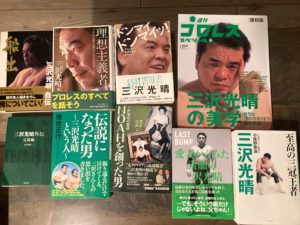
Top row, from left: Misawa’s self-published books

Departure: The Autobiography of Mitsuharu Misawa, published September 30, 2000;
Idealist, published April 13, 2004; and
Donmai, Donmai: A Message from Mitsuharu Misawa, published June 13, 2010

Second row, from left: Books about Misawa written by others

Misawa Mitsuharu Gaiden Complete Edition by Hirokazu Hasegawa, published October 31, 2009;
Mitsuharu Misawa: The Man Who Would Become A Legend by Masayuki Tokumitsu, published June 25, 2010;
Mitsuharu Misawa: The Man Who Created NOAH by Ryu Nakata and Makoto Honda, published July 18, 2007;
LAST BUMP: The True Face Of Mitsuharu Misawa As Seen By His Beloved Wife by Mayumi Misawa and Otsuki Marui, published July 30, 2010; and
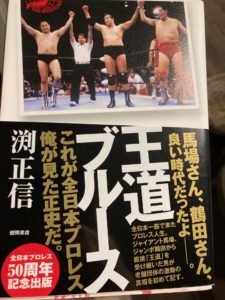
Supreme Triple Crown Champion Mitsuharu Misawa by Kagehiro Osano, published in 2022

Magazine: Weekly Pro Wrestling Special Edition: Long Interview With Mitsuharu Misawa

DEPARTURE is pretty self-explanatory: it’s Misawa’s autobiography and covers everything up to NOAH’s formation and his initial plans and predictions for that company. IDEALIST is meant to be food for thought, almost like an academic inquiry into wrestling with Misawa explaining the mindset behind his wrestling and wrestling ideas from the perspectives of a wrestler, booker, and company owner, and has plenty of nuggets of wisdom from the man himself. DONMAI is a weird book: it’s more a collection of what look like blog entries with Misawa talking very casually about life, travel, behind the scenes stuff, and interpersonal relationships.

Then there are the books written by others. GAIDEN is like an epilogue or extra story intended to cover Misawa’s final year, almost like a written flashback sequence you’d see in a movie, and includes some interesting stories and anecdotes about the man’s life. LEGEND was written by a Japanese media personality with close personal ties to Misawa and seeks to convey how Misawa became such a legendary figure in Japanese wrestling despite not achieving the same degree of “fame” as guys like Muto and Chono. NOAH covers Misawa’s work in creating Pro Wrestling NOAH and also shines a spotlight on Ryu Nakata, Misawa’s close friend and essentially his business partner in putting that promotion together. BUMP looks at Mitsuharu Misawa the person (and in some respects the wrestler) from the perspective of his wife and widow. SUPREME is like the ultimate Misawa career anthology; if Ichinose’s Four Pillars bio is meant to go over the Four Kings while leaving no stone unturned then this book is meant to be the same just for Misawa (and in fact this one uses that book as a reference).

Lastly, the magazine on the right is a special edition dedicated to covering Misawa’s career and includes extensive interviews from the likes of Kobashi, Taue, Akiyama, Ogawa, Takayama, Vader, referee Joe Higuchi, and many others.

It shouldn’t be surprising that Misawa is the most covered of the Four Heavenly Kings. He was the biggest star of that period, achieved the greatest success, and unfortunately suffered the most shocking fate. To this day Misawa’s career is both celebrated for how exciting and boundary-pushing he was as an athlete while also being something of a cautionary tale for future wrestlers. And yet it seems like the warnings that emerged with Misawa’s death seem to go unnoticed with much of today’s wrestling focusing on the extremes and excesses of what he and his colleagues did while not focusing on the other, more subtle things they did as well that had just as important of an impact on wrestling. So hopefully on this journey we’ll get to see pro-wrestling from Misawa’s perspective and understand what made him make the decisions he made, both inside the ring and outside it.

Continue reading
Scott's Blog of Doom
Rants

5-Star BOOK Reviews: Akira Taue’s Autobiography, Part VII (Final)

By Alex Podgorski on 15th April 2025

And now we come to the end of Akira Taue’s long and winding road in professional wrestling. This will cover some of the most challenging and difficult situations of his life, far more difficult than anything he has endured in either sumo or pro-wrestling. His professional and personal lives will both take serious downward turns, to the point that he ends up at one point fighting for his life. After reading his book in its entirety, I can honestly say that he might actually have overcome more adversity than Kobashi but since Taue’s more quiet and humble in his writings and public comments you have to really look at things from his perspective to truly understand that.

You can read parts one and two here, parts three and four here, part 5 here and part 6 here.

Akira Taue Biography

Continue reading
Scott's Blog of Doom
Rants

5-Star BOOK Reviews: Akira Taue’s Autobiography, Part VI

By Alex Podgorski on 14th April 2025

Akira Taue had an interesting career as the ultimate utility player in All Japan and beyond. He was a jack of all trades that could fit into any role and succeed in it. Even though he didn’t have much time directly in the spotlight he was always close by. As such it’s interesting to see how he pivoted from being Triple Crown Heavyweight Champion in 1996 to going through all the different roles the company asked of him. After all, this is a wrestler who looks at his profession as exactly that, a profession. With that in mind, let’s see how this through-and-through consummate professional observes some of the biggest changes in wrestling compared to some of his more idealistic and passion-driven contemporaries.

You can read parts one and two here, parts three and four here, and part 5 here.

Akira Taue Biography

Continue reading
Scott's Blog of Doom
Rants

5-Star BOOK Reviews: Akira Taue’s Autobiography, Part V

By Alex Podgorski on 9th April 2025

Jumbo Tsuruta’s departure leaves Akira Taue in an odd place. With Tsuruta sidelined indefinitely due to hepatitis the last real remnant of AJPW’s old guard disappears without ever cleanly putting the next generation over decisively. This loss of a main event star, coupled with Tenryu’s departure a mere two years earlier, leaves Giant Baba in a desperate booking predicament. How can he keep business steady, much less turn it around? It turns out the answer was a simple but significant team realignment. With Taue now without a regular partner he needs someone experienced and skilled enough to share the load…and it seems like in his mind the best colors to match Taue’s ruby red are black and yellow.

You can read parts one and two here and parts three and four here.

Akira Taue Biography

Continue reading
Previous Next

Search

Recent Posts

  1. Evening Daily News Update – July 19, 2026 Rants
  2. All Japan Pro Wrestling: Champion Carnival May 2nd, 2026 Rants
  3. Megabucks Presents : Atari tries to bring the fun back in the Nintendo Age (1987-1990) Rants
  4. The SmarK Rant for WWF Superstars – 01.03.87 Rants
  5. AAA Review – 07.18.26 Rants
Scott's Blog of Doom!
  • Email Scott
  • Follow Scott on Twitter
© 2026 Scott's Blog of Doom! Read about our privacy policy.