

5-Star BOOK Reviews: Mitsuharu Misawa’s Books, Part XI
By Alex Podgorski on 16 July 2025
So now that we’ve established that Mitsuharu Misawa was hamstrung in his ability to change All Japan, this next section covers how he tackled this dilemma. It’ll cover the background over how his new promotion, Pro Wrestling NOAH was formed, and why so many people chose to follow him. And just like last time, we’ll be relying on a few satellite viewpoints as well: Ryu Nakata, Kyohei Wada, wrestlers who became friends with him, and a few other backstage officials as well.
Furthermore, in translating all of these books and magazines I’ve uncovered something that, to be honest, I’m flabbergasted hasn’t been uncovered already by someone like Meltzer or some other wrestling historian since it shakes the very understanding of how events took place during one of the most tumultuous periods in modern wrestling history.
You can read part 1 here, part 2 here, part 3 here, part 4 here, part 5 here, part 6 here, part 7 here, part 8 here, part 9 here, and part 10 here.
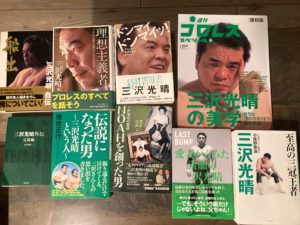
We begin with a note from Nakata’s book on the creation of NOAH, where it’s stated that Misawa’s original vision for “his own promotion” was MUCH smaller. Because of their struggles dealing with Motoko, Misawa and Nakata spent many nights eating and drinking at izakayas, which brought them peace. After many nights of venting their frustrations, a general idea emerged: they’d run an izakaya of their own while also running small, indy-level shows comprised of maybe three matches with five rising stars to nurture. Over time Misawa and Nakata would be accompanied on their drinking sessions by someone named Ohyagi, who served as AJPW’s senior managing director and was another victim of Motoko’s cold treatment in AJPW’s office. Specifically Nakata states,
The dream was to leave All Japan together and manage an izakaya as a means of livelihood while nurturing five newcomers from scratch. Once they reached a level where they could compete, they wanted to organize about three singles matches and hold a tournament.
“I thought that might be okay. Young wrestlers don’t need high salaries, and if we could fill a place like Korakuen Hall a few times a year, we could manage. President Misawa had said at that time, ‘I have confidence in developing young talent.’ That’s what I originally wanted to do.” – Ryu Nakata
However, Nakata soon shuts this idea down when he attempts to budget salaries and concludes that he could only guarantee salary for one wrestler and seven to eight staff members, no more (APOD: Keep this in mind when the actual departure/resignation announcements are made official). Around the same time AJPW’s new management structure is decided following Baba’s death: president Misawa; EVPs Toshiaki Kawada and Mitsuo Momota; Directors Motoko, Kenta Kobashi, Masanobu Fuchi, Yoshihiro Momota, and Sachiko Baba (APOD: I have no idea who this other person is, another Baba relative maybe?); auditor Masao Oshima; and Players’ Association Chairman Akira Taue. Upon being named President by unanimous decision from the wrestlers, Misawa vows to adopt good changes, but it isn’t long before Motoko – still the majority shareholder – imposes her will instead.
For what it’s worth, Nakata frames his decision to help Misawa form NOAH as the result of an accumulation of problems in dealing with both Giant Baba and Motoko as individuals, on top of his friendship with Misawa. I might to into this further later on if there’s enough interest on the stories around Giant Baba specifically, but the gist here is that Giant Baba (just “Baba” hereafter) and Motoko often contradicted each other. Nakata recounts one such a story early on when he helps Baba empty a storage unit or something full of random objects the family had collected over the decades and Baba would tell him to throw something out, only for Motoko to tell him not to. One time Nakata finds an unopened limited-edition doll of Giant Baba from 1970 in a pile and Bab lets him take it home, where he later learns said doll is worth around 700,000 yen. Of course, not long after Baba’s death Motoko approaches Nakata about said doll saying “that doll belongs to me!”, leading to him and at other times also Kyohei Wada being scolded by Motoko for simply following Baba’s orders.
In another example, Nakata recalls driving Baba around and proposing that Baba himself team with a then-rookie Kenta Kobashi to challenge for the All Asia Tag Titles – the oldest titles in All Japan, dating back to the Rikidozan era – only for Baba to initially decline it politely and for Motoko to scold him for making such a “reckless” suggestion. And yet Baba himself would later go on to do it, stating he had fun doing it. Such battles were part and parcel of Nakata’s daily life. Yet Nakata makes it clear that both Misawa and Motoko were out to protect Baba’s legacy and all he had built…but Nakata and Misawa were also out to protect the wrestlers, company employees, and their families first and foremost.
Nakata also notes that by 1998 the bubble economy had burst beyond doubt, accelerating a country-wide economic downturn and putting further strain on an already plateauing All Japan. As a result, small issues that would’ve been resolved easily in the past become serious issues and underlying issues bubbled to the surface. Furthermore, Nakata suspects that Motoko’s outbursts and at times unreasonable behavior may have been fueled by her husband’s deteriorating health.
Nakata comments that neither Motoko nor Shohei were fully satisfied with Misawa once he became matchmaker. However, Misawa wasn’t doing whatever he wanted 100% from the get-go either; Nakata believes that Misawa’s decisions were tinged with a sense of “what would Baba do?” while adding his own twist to it. Nakata also notes what has been said to death at this point: that the Four Kings’ style was getting more excessive with each passing year, despite Baba being constantly impressed with their efforts. However, one proposal really put the wheels of change into motion: someone (it is not said whom) suggests that the annual Tag League tournament should be held twice. Nakata is extremely worried by this proposal, concluding that adding such a demanding schedule on an already-taxed-beyond-known-human-limitations roster would “lead to fatalities”. Thankfully this idea never sees the light of day, with the closest version being a double-round robin in the 1996 edition. This proposal, Nakata observes, is quashed by Misawa out of concern over the wrestlers’ health in the event it were to be approved.
The timeline for events skips ahead, with few details emerging from Nakata’s book or Misawa’s autobiography about what happens between these late-night drinking sessions among frustrated work buddies and the spring of 2000 when all hell breaks loose in AJPW’s boardroom. The office situation in 2000 escalates in March when the overwhelming majority of wrestlers refuse to sign new contracts in line with the new Japanese fiscal year. Whether the wrestlers were properly paid during this contract-less period isn’t stated, though without Shohei Baba’s deep pockets one is free to conclude one way or another. The wrestler’s union/players’ association, at the time headed by Akira Taue, proposed amendments to the contract terms but no resolution was ever made. On this Nakata comments,
“The wrestlers’ union was trying to revise the contract terms to be more favorable for the wrestlers. The existing terms were too restrictive. The idea was to loosen them up a bit. For example, the previous terms included provisions like, ‘If you get injured, you’ll receive full pay for a certain number of days, half pay for another set of days, and beyond that, no support at all.’ The union was negotiating to strengthen the guarantees in the contract. The discussions between President Misawa and the wrestlers’ union, akin to labor-management negotiations, had reached an agreement on the union’s side. But they were waiting for the owner’s final approval, which never came. So, in the end, no one signed. We received no response whatsoever, and the tour started, leaving the series to begin with everyone still under expired contracts.” – Nakata
Two months later tensions reach their boiling point. On May 28th Misawa is dismissed from his role as company president. Public comments frame this decision as stemming from Misawa’s level of exhaustion; however given Misawa’s intentions he knows this is coming and is more or less on board with it from the beginning. By June 9, 2000 the wheels are already in motion as Nakata describes calling Wada’s name as referee in the Budokan one last time while Misawa, after his match that same night, foregoes the customary post-show summary and leaves the event. The next day Nakata tenders his resignation to All Japan but this is publicly reported by AJPW as a “dismissal”, for which Nakata would later sue and receive a settlement.
Days later on June 13th another board meeting takes place in which six of the executive board members – Misawa, Mitsuo Momota, Yoshihiro Momota, Akira Taue, Kenta Kobashi, and another director named Daiyagi – all tender their resignations. It’s at this board meeting that Misawa finally makes his intentions clear to leave All Japan and form his new company. However, Misawa basically jumps the gun in proceedings and makes his announcement before Motoko or anyone else can actually begin the meeting.
By doing so Misawa doesn’t give Motoko the chance to say anything…which, according to Kyohei Wada, dooms him for the rest of his career.
In both his 2004 Autobiography “Life Is Just Right When You Count To Three” and his 2010 follow-up book “Reading All Japan Pro Wrestling” Wada recalls interacting with Motoko during this period of immense personal turmoil and indecision over AJPW’s future. After over a year of extreme bitterness and animosity towards Misawa, Motoko confides in Wada that her intentions were TO SELL ALL OF HER SHARES IN ALL JAPAN TO MISAWA, MAKING HIM THE MAJORITY SHAREHOLDER OF THE ENTIRE COMPANY:
“Motoko-san had intended to sell her shares of All Japan Pro Wrestling to Misawa during that board meeting. The price would have been whatever Misawa proposed—whether it was 100 million or 200 million yen, it didn’t matter. By transferring the shares, she planned to completely step away from All Japan Pro Wrestling.
Motoko-san had reached a compromise within herself, deciding to leave the company and pass it on to Misawa. However, before any agenda could be discussed, they suddenly announced their resignation. They declared their departure, and the board meeting ended abruptly.
There was no opportunity to convey Motoko-san’s intentions. If, on that day, Misawa had accepted the shares from Motoko-san, Mitsuharu Misawa might still have been the president of All Japan Pro Wrestling today. History is a mysterious thing, I often think.” – Kyohei Wada, verbatim excerpt from both books
There is further corroboration of this narrative in a book on Giant Baba by Tadao Monma, a sports journalist with over 50 years’ experience who interacted with Giant Baba for over 35 years. In his book, Monma notes,
“There was no way for their opinions to align, as Mrs. Motoko had intended to watch the situation for a while and eventually hand over real power to Misawa. It is said that Misawa strongly resolved to part ways with Motoko Baba and All Japan in early spring after the memorial event. Misawa had like-minded companions and felt a sense of urgency that “time was running out.””
(APOD: This is, without question, the biggest bombshell revelation I’ve read in going through any of these Japanese books. Had events preceded only slightly differently, had Misawa and his crew exercised the slightest bit of extra patience and given Motoko the time to make her announcement as opposed to just barreling ahead and announcing his resignation, the entire NOAH Exodus would’ve likely been avoided. Motoko would’ve handed all of her shares over to Misawa and completely removed herself from AJPW involvement. And assuming she meant ALL of her shares then it would also have meant that she’d withdraw herself from all of the subsidiary companies as well, giving Misawa full 100% control over All Japan and the freedom to run it in any way he liked. The entire wrestling landscape today would, in all likelihood, be radically different and, considering how things unfolded, there’s a good chance Misawa would still be alive today as well. At the same time, Monma’s comments at the end about how Motoko was basically watching him from afar and evaluating him as a leader make some sense but ignore the wider picture over how Misawa was constantly facing pressure on a daily basis to juggle multiple competing priorities and needed to put wrestlers’ health and financial security at the forefront).
Instead Misawa goes through with his departure and three days later more people tender their resignations. In total, according to Nakata, the departing wrestlers are as follows: Mitsuharu Misawa, Kenta Kobashi, Akira Taue, Mitsuo Momota, Jun Akiyama, Takao Omori, Yoshihiro Takayama, Yoshinari Ogawa, Rusher Kimura, Haruka Eigen, Tsuyoshi Kikuchi, Tamon Honda, Masao Inoue, Satoru Asako, Jun Izumida, Kento Kakihara, Kentaro Shiga, Yoshinobu Kanemaru, Takeshi Morishima, Makoto Hashi, Naomichi Marufuji, Daisuke Ikeda, Takeshi Rikio, Kenta Kobayashi (KENTA), Takashi Sugiura (then a trainee). There is also the matter of non-wrestling staff including referees, officials, administrative staff, and so on, which includes names like Nakata himself, Kanji “Joe” Higuchi and others.
All in all, Misawa and Nakata’s vision of a microscopic indy fed soon becomes an entity comprised of 50 people. How would Misawa and Nakata, now gone from All Japan, be able to find the money to cover all of these individuals’ salaries AND run events? Some answers to those questions will be covered in the next section.
Thanks for reading.