

5-Star BOOK Reviews: Mitsuharu Misawa’s Books, Part VII
By Alex Podgorski on 16 June 2025
It has been sixteen years since Mitsuharu Misawa tragically passed away in the ring. His legend still lives on through his matches that’ve been uploaded across the internet, through later generations of wrestlers who’ve adopted his style of wrestling, and through the countless writings about him that can be found in almost any corner of the internet. That, of course, includes this series as we continue our deep dive into the books written by or about Misawa.
This next section will cover the entirety of the year 1994 and the first half of 1995. There are a few important developments during this period as well as a singular theme bringing all of them together: Misawa’s unending determination to forever shed the “Ace of Glass” nickname that had been following him like a dark cloud. Even though, again, there doesn’t appear to be any surviving text showing those exact words printed out, Misawa still truly believed that the wrestling critics thought of him that way. He tried to shake off that reputation in 1992 and 1993 but everything he did during those years didn’t seem to help. But will that change in 1994 or 1995?
You can read part 1 here, part 2 here, part 3 here, part 4 here, part 5 here, and part 6 here.
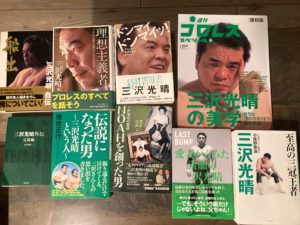
Misawa’s 1994 opens with an abnormal situation that rouses the man’s anger: the U-Inter 100 Million Yen Incident. On February 15th UWFi announces a “Pro Wrestling World Tournament” open to any wrestler from any organization. The winning prize for the winner is set at 30,000,000 yen, or about $US 300,000. Special invitation letters are sent to five of the biggest wrestling names not in UWFi already: WAR’s Genichiro Tenryu, RINGS’ Akira Maeda, Pancrase’s Masakatsu Funaki, New Japan Pro Wrestling’s Shinya Hashimoto, and All Japan’s Misawa. UWFi up’s the ante further by declaring that, if all five of these special guests agree to participate, they’ll increase the prize money to 100 million yen. These public statements leave Misawa cornered: if he accepts then he’s committed to the tournament and if he participates he might find himself in a position where he might be exposed as he’d be facing off against wrestlers with different backgrounds, thus risking further spread of the “Ace of Glass” reputation he’s trying to shake off. But if he refuses he risks looking like a coward. Instead Misawa opts for a third choice: neither accepting nor rejecting the offer but condemning the tournament’s premise altogether in an uncharacteristically fiery tone:
“It’s ridiculous! I’m just an employee and a wrestler. Who’s the president? Nobuhiko Takada? It doesn’t matter if it’s 1 billion yen or 10 billion yen—it’s all the same to me. Would an employee of Mitsui Bank go work at Mitsubishi Bank? Would a Gong reporter write articles for Weekly Pro Wrestling just because the pay is better? I’m not a freelancer. All the years I’ve worked hard in All Japan Pro Wrestling would be meaningless. Their fundamental perspective on pro wrestling is completely different from ours. More than being angry, I’m just dumbfounded. I think he knows exactly what he’s doing. And anyway, it’s strange that this was directed at me. This isn’t just a personal issue for me. If they were serious about wanting me to participate, they should have sent their request to Mr. Baba. That’s the proper way to do things. If people could just do whatever they wanted, no one would have to struggle. There’d be no need to think about anything! Fans might want to see it, but doing that would betray the fans who love All Japan and come to watch us.”
Misawa goes further on this subject, shutting the door on possible interpromotional matches and focusing inwardly on further improving the Four Heavenly Kings pro-wrestling he and his cohorts were showcasing at the time:
“Sure, there are things you can’t know unless you actually face someone in the ring. But honestly, at this point, there’s no one from another promotion that I feel like fighting. Their perspective on pro wrestling is just different. Some of them don’t even fit the definition of pro wrestling at all. Pro wrestling isn’t something that can be done so easily. It’s not something you can just jump into from student wrestling and immediately succeed at. Well, people are free to say whatever they want, but they should take responsibility for their words. I don’t care what anyone says, but they should look at their own skills first before talking. I don’t want to fight someone who just looks good but has no technique.”
Years later Misawa comments on this time with a bit more introspection and maturity and claims that those earlier comments came from a strong personal need to defend All Japan at a time when more and more promotions were popping up trying to get their piece of the pie:
“The 1 billion yen from UWF International? Yeah, there was some talk about that. Well, those were tough times back then. I think I just felt strongly that we needed to focus on our own business. Of course, I had pride in our matches, and I didn’t want to lower the quality of our fights by getting involved with strange promotions. I think all of that was wrapped up in what I said at the time.” – Misawa, circa 2004-2005
(APOD: It wouldn’t be until two years later that All Japan would finally start opening up again after something like six years of strictly-enforced isolationism. But by that point their business would begin to plateau. Yes the Four Kings were still popular but business could only grow so much with the same rotating crew of people in the main-event slots).
A month or so after this incident Misawa accomplishes something big by pinning Giant Baba. Although it’s only a tag match it’s still a monumental achievement given Baba’s reputation and unyielding popularity. Additionally, Baba’s partner in this match is Stan Hansen while Misawa teams with Kobashi. There’s some heavy symbolism in this victory that further amplifies the passing-of-the-torch this match is meant to be. The only other native/Japanese wrestler to pin Baba prior to this in recent times is Genichiro Tenryu, which takes place in a tag match in November 1988. In this March 1994 match, Misawa and Kobashi cycle through all of their various finishers but nothing works. This forces Misawa to do something new, and so he wins the match with a diving version of Baba’s own running neckbreaker, which will come up a few more times in the years ahead.
“This has become an unforgettable event in my pro wrestling career. The joy is on the same level as winning the Triple Crown, but the meaning is different. This makes it even harder for me to lose. If I lose, it would be unfair to all those who have lost to me so far. Of course, one day I will lose too. But even when I lose, I can’t afford to lose poorly. To Baba-san, all I can say is, ‘Thank you very much.’ While I’m happy, there’s also a sense of loneliness. It’s a bit like a child growing up and becoming stronger than their parent. It makes me feel like I have to work even harder from now on.” – Misawa’s post-match comments.
From here we shift to the 1994 Champion Carnival and the description of events here comes across as a mix of kayfabe and reality as it pertains to Misawa’s neck injury. Osano’s writings describe what was disclosed by All Japan at the time: that Misawa suffered a neck injury at the hands of Doug Furnas’ Frankensteiner and he is forced to forfeit the rest of his tournament matches. However, it has been widely discussed that this injury was a work so that Misawa, the odds-on favorite, could be removed from the tournament without actually taking any losses. This angle allows two other wrestlers to be showcased more prominently in the tournament, those being Toshiaki Kawada and “Dr. Death” Steve Williams, both of whom end up in the tournament finals. Kawada wins tournament, becoming the first of the Four Heavenly Kings to do so. What’s also notable is that Misawa still wrestles a few non-tournament matches during the same tour, noting that it would be disrespectful to the fans if he didn’t appear.
After glossing over another successful world tag title defense against Kawada and Taue (May 21, 1994, another 5-Star Classic), we get to Misawa’s next Triple Crown title defense which is, of course, 6-3-94. We get some pre-match hype from Kawada who simply notes, “If I lose here, it’s over for me.” The match opens fiercely with some hard strike exchanges during the opening five minutes. A kick from Kawada strikes Misawa’s ear causing it to bleed. At some point Misawa hits a release German suplex, the trademark of the Four Kings’ wrestling style, and at the 35-minute mark Misawa still fights back against a kick barrage and drops Kawada with more elbows. Then he unseals his hidden super-finisher which had remained dormant for at least two years and plants Kawada with the Tiger Driver ’91 to win the match.
“In the end, I’m always the one who gets subjected to those experimental moves. I was the first to take that release suplex that sends you flying. Normally, a person would die if they landed headfirst.” – Kawada on the dangerous moves used in these matches
Misawa’s victory is short-lived, however, because a month or so later he faces Dr. Death in his next defense and loses. Doc hits him with two of the most vicious Dangerous Backdrops ever seen, on par with those legendary ones from his match with Kobashi in August 1993. Misawa’s reign as Triple Crown Heavyweight Champion ends after 705 days, a record that still stands to this day. As Misawa licks his wounds Osano points out how battered Misawa was at this time and suggests that Misawa was battling himself as much as his opponent. Misawa was perceived to be under immense pressure to carry All Japan without Tsuruta and that manifested itself as these in-ring classics that, while exciting and constantly exceeding expectations, took serious tolls on his body. Misawa, however, dismisses this claim of being under pressure and says that he was simply trying to push himself.
“It’s not as noble as all that. Even if I had such feelings, in the end, it’s for myself. I just wanted to push myself as far as I could because I wanted to be satisfied with myself!”
Osano shifts the spotlight onto himself for a moment, adding more context to this next section. Four days after Misawa’s title loss he becomes editor-in-chief of Weekly Gong and tries to smooth over his relationship with All Japan once again. Though he’s not covering their shows in any official capacity, he does start hanging out with Misawa and the others in their old hangouts again and they talk as friends. It’s through these conversations and observations that Osano manages to contextualize the appeal of All Japan’s wrestling product at the time and why it’s so popular:
“At that time, the Japanese pro wrestling world had entered an era of multiple organizations, where provoking through the microphone and attracting fans with soap-opera-like storylines became increasingly important. However, the Four Heavenly Kings wrestling adhered to one-off, self-contained matches that focused solely on the action in the ring, ensuring even first-time viewers without prior knowledge could enjoy the experience.
In today’s pro wrestling, as soon as a title match ends, the next challenger appears to make a mic appeal, leaving no time to savor the aftermath of a match. However, in All Japan at that time, mic appeals were nonexistent. The only mic usage was the entertaining remarks by Rusher Kimura, and even when the Triple Crown champion defended their title, the only speaking done in the ring was a victory interview for television.”
(APOD: There it is, the most important reason why 1990s All Japan was so adored at its time AND why it holds up today as well. Everything is condensed into a single match and even someone without any prior knowledge of this style and its participants can watch any match at random and enjoy it just as much as someone that had been following it for years. It’s this combination of accessibility and value-for-money-and-time that make the Four Heavenly Kings era of All Japan so rewatchable and so admirable).
Around this time Osano also starts speaking with Baba directly some more and Baba tells him that the matches are dictated not by his will but by what the fans want. At the same time Baba gives a detailed explanation about why he turned away from the dusty and controversy-ridden opacity of Showa-era wrestling towards the clearer, more sportsmanship-driven style of Heisei-era wrestling:
“The last person to commit a foul in our promotion was Tiger Jeet Singh. After we declared, ‘No fouls in our promotion,’ he had a match with Abdullah the Butcher and lost by disqualification. We decided not to invite him back anymore. If we didn’t go that far, it wouldn’t set a clear example. The reason is that disqualification losses allow a wrestler to save face when they’re feeling a bit off or think they can’t win. They don’t have to grow. They don’t get pinned with a ‘One, two, three,’ and they can still stand tall by flipping the script. Double ring-outs are the same. I know this well because I’ve done it myself (laughs).
Fans pay good money to see who wins, so it’s not acceptable to leave them dissatisfied with unclear finishes. That’s why we decided to eliminate them. We also decided that, like in other sports, referees in pro wrestling must be sacred and hold full authority. Throwing referees around or similar actions were strictly prohibited. I believed that was the fastest way for pro wrestling to be recognized as a legitimate sport. That’s how we reformed things.”
On this Misawa opines,
“Using fouls to escape might be one way to avoid losing. But there’s a sense of accomplishment after you’ve given it your all. As long as I feel I can still move, I keep going… because I hate finishing a match and wondering, ‘Could I have countered that at that moment?’ That’s why I push myself. In the end, it’s not just a fight against your opponent, it’s also a huge battle against yourself.”
To further distinguish not just the AJPW style but the main-events from semi-mains or undercard matches Osano recalls a conversation with referee Kyohei Wada about two Misawa matches on the same tour with different finishes. One ended via Misawa’s new facelock and the other ended with a three-count. According to Wada, Baba noticed a difference in the atmosphere between the decision coming via submission and the audience counting “one, two, three” for the deciding fall. From Baba’s perspective the latter was more exciting for the fans which is why he preferred that main-events end with three-counts so that audiences could experience that absolute peak of excitement when a main-event match ended. As a result, Baba decreed that main-events would only end via three-count while semi-mains and lower-card matches could end via submission. And since wrestlers like Misawa had both a submission and a bump finish this rule, which was not public knowledge, allowed audiences to believe either one could finish a match, thereby leaving them guessing on when and how things would go (APOD: That said submission finishes largely peaked in 1995 and weren’t used in All Japan 1996 onwards. It wouldn’t be until the NOAH Exodus that these wrestlers would actually win matches with submission holds again).
Misawa continues to push himself through the rest of 1994 and into 1995. There isn’t anything notable about this section so Osano skips all the way to 1995 when Misawa has another instance of bad luck…that in some ways saves his reputation.
Misawa enters the 1995 Champion Carnival on a roll and starts adding even more moves to his finisher repertoire. He beats Doug Furnas and Takao Omori with a Reverse Nelson Deathlock, a combination of the Indian Deathlock and a Reverse Full Nelson hold. He establishes the Tiger Suplex ’85 as another possible match-ending move when he pins Kobashi with it. He also uses the facelock to beat Dan Kroffat by submission and beats both Jun Akiyama and Danny Spivey with the (standard) Tiger Driver. Things look to be going his way, especially as he goes through these matches relatively fresh and healthy. But then his fortunes change when Kawada kicks him and breaks his orbital bone.
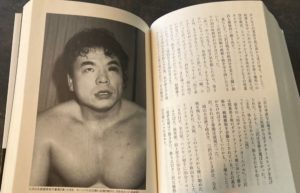
Misawa’s terribly messed up left eye, photo courtesy of Ichinose’s Four Kings bio
Misawa escapes from Kawada for a moment and his body language makes it obvious that something is very wrong. Misawa describes feeling nauseous almost instantly but didn’t feel any immediate pain. That said he does note that this one “feels different from usual injuries”, but still he continues the match, which goes on for another thirty minutes and ends in a draw.
Reflecting on Misawa’s toughness, Kawada notes that Misawa taking hits head-on wasn’t abnormal and he had trained himself to redirect the force when possible:
“I didn’t realize Misawa-san had fractured a bone. Misawa-san has the capacity to take everything in. That’s an incredible trait, I think. It’s not that I’m mercilessly kicking Misawa-san. I do the same thing to everyone, but other wrestlers dodge, so it looks that way. Misawa-san stood his ground and took it. He doesn’t dodge, and in Misawa-san’s case, he also deflects and redirects the force. If you take that head-on from the side, it can hit much harder. Deflecting means taking it head-on and letting the force escape backward, but one wrong move and it can break you. Misawa-san has broken bones multiple times, not just in Okayama.”
Misawa soldiers on and continues the tournament, noting that he was completely used to injuries at that time but didn’t want to slow down. He was so used to being in pain that he developed a “there’s nothing you can do about it now” mentality once an injury occurred. He notes that as long as he can still walk he’ll still step into the ring since he can’t afford to take any time away to heal. “There’s no replacement for me in this world”, notes Misawa. He also notes that if that injury would’ve left him blind in one eye, so be it. He describes not being one to think about the future and only thought of the present. Even if such a thing were to happen again and if “things didn’t work out” he’d accept it as the path he chose.
He continues in the tournament all the way to the finals where he faces off against Akira Taue, with whom he went to another 30-minute draw. This tournament finals match was, and is, an absolute classic in the AJPW cannon and easily Taue’s best singles match. Not only does Taue work the eye injury like a proper American wrestling heel but he gets the crowd to boo him like crazy in one of the most intense, heat-filled AJPW matches you’ll ever see. Misawa, in turn, fires back with heavy artillery, including a rolling elbow smash ten minutes in that legit knocks Taue unconscious. Taue fought with everything he had as the fully-awakened Heisei Monster, but not even the combined power of a release German suplex, a sitout Powerbomb, and his Cliff Nodowa, could keep Misawa down. Misawa was able to rally back and hit two consecutive Tiger Suplexes to secure the victory and win his first Champion Carnival tournament. In doing so, Osano notes that finally, after so many years, Misawa finally manages to dispel the “Ace of Glass” nonsense that had allegedly been whispered among fans and critics.
APOD: I figured that I’d include as many direct quotes from this section as possible so that we’d understand both Misawa’s mindset directly from the man himself and the mindset of the professionals who followed his career when it was in progress. Misawa clearly had a lot on his plate at the time and really struggled with creating a positive image of himself as All Japan’s chosen ace. But as the conclusion of the 1995 CC showed he triumphed at last, though not without collecting more injuries along the way. Though Misawa was open and honest about his experiences here personally I think Osano’s explanations of things about the Four Kings’ wrestling style was by far the most important thing to pull from this section. I can’t tell you how many times I’ve tried to watch some of today’s wrestling only to be sold a false bill of goods and end up disappointed with what was put on (and judging from the comments in some of the live threads and the show reviews from Scott, Kat, Mike, Maffew, or anyone else, a lot of you have felt the same way as well). With so much negativity surrounding much of the wrestling landscape, isn’t it better to turn the clock back and find something to watch that can be enjoyed just for its bell-to-bell content? I certainly think so, and clearly so too did the people behind All Japan’s golden decade in the 1990s).
Thanks for reading.