

5-Star BOOK Reviews: Akira Hokuto’s Books, Part XI
By Alex Podgorski on 15 May 2026
Welcome back to my coverage of Akira Hokuto’s books. This section will cover an important event in her life: her trip to North Korea for the infamous Collision in Korea event. This event has been covered already but given how special that event was, it’s always nice to see it from more perspectives. Aside from this serving as a litmus test for the state of Hokuto’s wrestling ability, it also led to a major development in her life as she met her future husband Kensuke Sasaki between matches. Once they became an item they drew plenty of new eyes: for a time Sasaki & Hokuto were a high-profile celebrity couple in Japan. These two events are inextricably linked and, by the end of this section, Hokuto and Sasaki will be as well.
You can read part 1 here, part 2 here, part 3 here, part 4 here, part 5 here, part 6 here, part 7 here, part 8 here, part 9 here, and part 10 here.
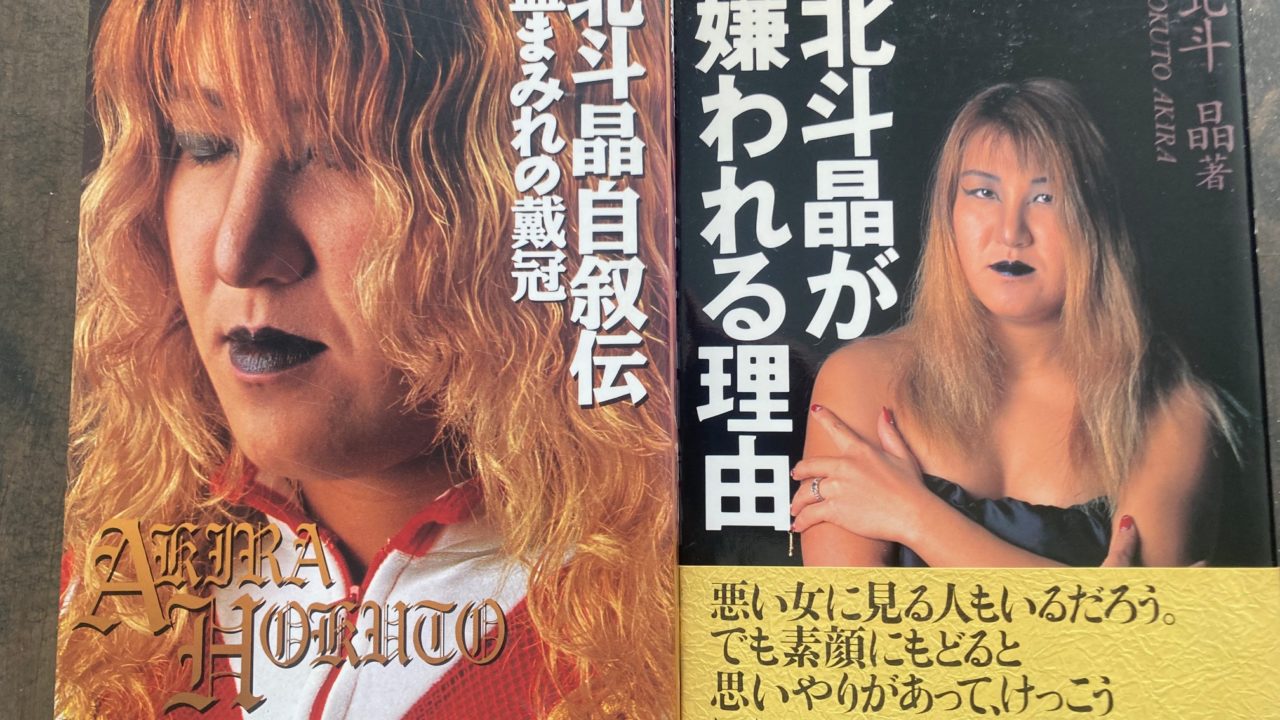
Part 11: Akira Hokuto’s adventure in Pyongyang
Hokuto opens by saying that North Korea has always fascinated her, however she looks at it through the lens of pro wrestling which limits perspective on how things are in the country. We get more of Hokuto’s internal struggles as she vows to use wrestling to show North Korea her spirit, even though her body and heart were weak at the time. Hokuto and Bull Nakano meet all the other wrestlers and the reporters at Tokyo Station and they end up taking a bus from there to Nagoya Airport out of which they’ll fly out. While riding the bus a NJPW wrestler hands them a cellphone, apparently to speak to a mutual friend. Hokuto and Nakano take turns talking to this friend until the minutes run out, at which point Hokuto, having spoken less, returns the phone back to the wrestler with a polite but timid thank you. The wrestler in question is Kensuke Sasaki. Though she’s not overly shy, Hokuto admits she doesn’t like saying much to people she’d just met and jokes a bit how her first words to Sasaki were “sorry” and “thank you very much.”
The plane they fly in is described as a dilapidated Cessna in such poor condition that Hokuto worries that, like something out of a manga, parts would come off mid-flight. This leaves her too anxious to sleep. Upon arrival in Pyongyang her first impression is that it’s grey. Monochrome grey and drab. Scanning her surrounding further she sees that there’s not much there and with a childlike curiosity ponders what people actually do in this country for work (APOD: Either she’s playing dumb for dramatic effect or she legitimately doesn’t know about North Korea is hard to say. But if it’s the latter…maybe she’s better off NOT knowing). This curiosity bubbles within her and she blurts out a question to her interpreter who gives a vague response: “We live for this country.” Hokuto and Nakano are also warned not to go out at night because their bright colored hair stands out too much.
The first night of the two-night event comes around and Hokuto is followed by a camera crew who are filming her as part of a so-called return tour (APOD: This is her first match in Japan since the Dome show). As part of this promotion a member of the camera crew tells her that she’ll be interviewed alongside Shinya Hashimoto. When she gets to the interview location in preparation for later she greets whom she thinks is Hashimoto but is actually Sasaki again. Afterwards she goes to the venue by car and passes by thousands of people walking towards the stadium. The sight of 190,000 people reinvigorates her wrestling spirit and she vows to put on a good match. At first the crowd doesn’t react to the entrance music but then they start making noise when the women actually come out. Unfortunately, once the match starts Hokuto describes feeling unable to move the way she wants to, partially due to being inside a different sized ring from the ones she’s used to. In an unusual reflection for one who considers herself so selfish, rather than blame her opponents for not being on the same wavelength as her, Hokuto concludes that Manami Toyota and Mariko Yoshika had simply improved that much while she had fallen behind. Then after the match Rossy Ogawa tells her bluntly that she was the worst in the match, that she had no stamina, and that her body couldn’t keep up (APOD: Apparently it was still good enough of a match for Dave Meltzer to rate it ****).
Rossy’s words sting so bad Hokuto immediately bursts into tears when she returns to the locker room. Again she thinks of quitting and walking back her vow to keep wrestling. Later at dinner she refuses to eat due to the frustration which is a first for her. She claims to be a careless person, one who thinks “whatever happens, happens” (APOD: If we’re taking her words here and in BLOOD SOAKED at face value then we can see that’s untrue as she does seem to worry a lot). She gets a small reprieve from this overwhelming gloom during that interview alongside Hashimoto and his dirty jokes. Later, when the other women call her room to invite her for karaoke she blows them off. She ponders going outside but then realizes that the shops near their hotel weren’t actually selling anything beyond overpriced knickknacks and generic dollar store wares. Realizing there was nothing to do there, Hokuto goes to the hotel basement where her AJW compatriots are waiting – along with basically everyone else who came on the tour.
A few rounds of bad singing makes Hokuto laugh but after a bit a reporter named Yano asks Hokuto how she’s doing and notices her weight loss. Her mood changes instantly and as the crowd slowly dissipates she and Yano go to a small corner to talk about it further. There she admits to him that she regrets coming back and starts trying again when suddenly a voice cuts in and admonishes Yano for making a woman cry. It’s Sasaki. Yano explains the situation and then Sasaki offers to listen to Hokuto’s troubles. She’s initially skeptical that he’d understood her plight as a women’s wrestler, but as a wrestler himself he may have common ground with her. After her longwinded explanation, Sasaki doesn’t tell her what she should do but instead suggests she change her perspective:
“Maybe you’re so tired because you’ve only been fighting for yourself until now. For example, if you fought for someone else… for your family, for your fans, for your juniors, if you set a goal to fight for anyone, wouldn’t you be able to keep going? What we do is not just to give people dreams, but I think we do it to leave something behind. Like leaving something for our juniors, instilling our good qualities in them… Anyway, I think I shouldn’t quit until I’ve left something for my juniors.” – Kensuke Sasaki
Their conversation lasts maybe ten minutes yet these words strike a deep chord within her and serves as the big push she was looking for. By changing this perspective Hokuto concludes that she needs to show the audience the good times and the bad. By showing her in decline or wrestling like “an old rag”, she realizes it’s okay to not be perfect. For her next match Hokuto wrestles without make-up or any extra character trappings; instead she wrestlers more like her real self but with the Akira Hokuto ringname and the moves she learned in Mexico as Reina Fubuki. This is a singles match with Nakano and goes much better, so much so that later on in the hotel basement, Nakano, her cherished senpai, praises her for her performance.
Another night of karaoke ensues and Hokuto finds herself sitting next to Sasaki by chance. Their conversation is initially limited to small talk. Despite some initial reservations, Hokuto joins the other wrestlers, male and female, exchanging numbers, though she implies it’s more out of not wanting to be rude than it is out of genuine interest. However, she takes some time doing this with Sasaki, only getting his number at the airport on the way home. (APOD: For anyone wondering, no, neither Hokuto here nor Sasaki in his autobiography write anything about their reported night of passion that supposedly kept the entire Pyongyang Hotel up all night). That said, once she boards the plan she finds herself sitting next to Nakano again and Nakano hears from someone that a rumor going around that Nakano & Sasaki are a perfect match for each other and will soon be married, which Hokuto initially dismisses as crazy talk.
Upon returning to Japan they part ways with Hokuto heading back to Tokyo and Sasaki heading to Fukuoka for a big NJPW event. However, the day before the big NJPW Fukuoka Doma, Hokuto calls Sasaki to wish him good luck. That turns into a longer conversation that’s more of a Q&A with her asking him lots of questions. She learns they both entered wrestling in the same year (APOD: which is different from their formal debuts; though both entered in Showa 60/1985, Hokuto debuted in May of that year while Sasaki debuted in February 1986, which would make her the senpai) and about their similar experiences as trainees. One minute Sasaki would be totally serious, and the next he’d switch to a childish topic like, “Don’t you wish you had Doraemon’s Anywhere Door?” In the end this initial conversation lasts four hours and as they finish Sasaki promises to call her the next day.
Over time they get closer and starts referring to each other with more informal honorifics. One conversation goes a bit awkwardly with her admitting to being at the Tokyo Dome for Inoki’s matches and asks if he wrestled on that show, to which he responds “Uhh…I was in the main event”, which embarrasses her because she watched the show from the commentary table. They pivot to the upcoming AJW show in Korakuen Hall on May 7th, which will feature, among other things, Suzuka Minami’s retirement. Still feeling conflicted, Hokuto asks Sasaki his opinion on her attending and he says he should to do something for Minami. Then he blurts out that when they were sitting together in North Korea he thought to himself, “she’s my wife”. This surprises Hokuto but she knows it’s not an outright confession or admission. Instead, Sasaki proves his intent through action: after spending an entire night talking about Minami’s retirement, not only does Sasaki convince her to attend but, unbeknownst to her, he books the first flight out of Fukuoka to Tokyo and attends the event in person, having not slept a wink either.
But despite the warm feeling his actions give her, Hokuto deals with another reality in the form of gossip and rumors circulating in the wrestling media. Reports are already starting to swirl. An unnamed individual warns her about the impact this could have on her career and implies she’ll be used for fun and dumped. And in her particular case, given all her public comments about retiring and withdrawing, a sudden change of heart due to romance would cause her stock to plummet, especially since she has cultivated a particular “scary” image to the public. This leaves her torn and emotional. Then on May 10th the two meet for dinner and go back to Sasaki’s apartment. He tells her to help herself to anything she wants from his fridge, which is limited to Korean ginseng, mamushi (snake) drink, and protein shakes. Then out of nowhere he pops the question and proposes. She’s stunned and then admits the conflict within her about having to choose between him and wrestling. Sasaki, however, tells her he’s picking both: wrestling and “Chako” (Hokuto). For Hokuto this represents something historic: to her recollection, no one in women’s wrestling had ever gotten married and continued wrestling, unless they did so in secret. Feeling conflicted once again she turns to Nakano, the only other person she trusts. However, instead of getting the expected harsh warning, Hokuto hears nothing but joy and congratulates her on being “Japan’s first housewife wrestler”. Then three days later their marriage is officially announced.
APOD: This was a nice, heartwarming reprieve from the gloomy atmosphere Hokuto had setup in the prior section and, indeed, from the very start. She had long presented herself as this person with big dreams who also struggled with many worldly challenges. Her writing made it clear she wasn’t always in the best headspace and she seemed to go through wild emotional variations on a regular basis. Yet here she went from being despondent following an underwhelming performance to accepting a wedding proposal in the span of fifteen days. Going back to part one when she mentioned being unwanted as a child it was really sad to read, as were all the moments where she expressed self-doubt and worry about her future. Yet here she is being proposed to by someone who clearly believes in love at first sight. Even if the details about North Korea were limited, it’s refreshing to see a bright spot in a sea of misery, so hopefully that continues from here on out.
As always, thanks for reading.