

5-Star BOOK Reviews: Akira Hokuto’s Books, Part IV
By Alex Podgorski on 27 March 2026
This next section will cover the most harrowing and challenging part of Akira Hokuto’s life: her terrifying neck injury. In many ways that moment still hangs overhead overshadowing her more legitimate accomplishments: to this day there’s talk from those who vaguely recall specific details about “that one girl who broke her neck taking a second-rope Tombstone”. Well that girl is Hisako Uno before she’s rechristened. This section will be filled with her own recollections of her injury (what little she can remember), how doctors saved her life, and how she came so close to ending her own life as well. Hokuto has been very open and straightforward thus far and that won’t change as we cross this particular bridge.
You can read part 1 here part 2 here, and part 3 here.
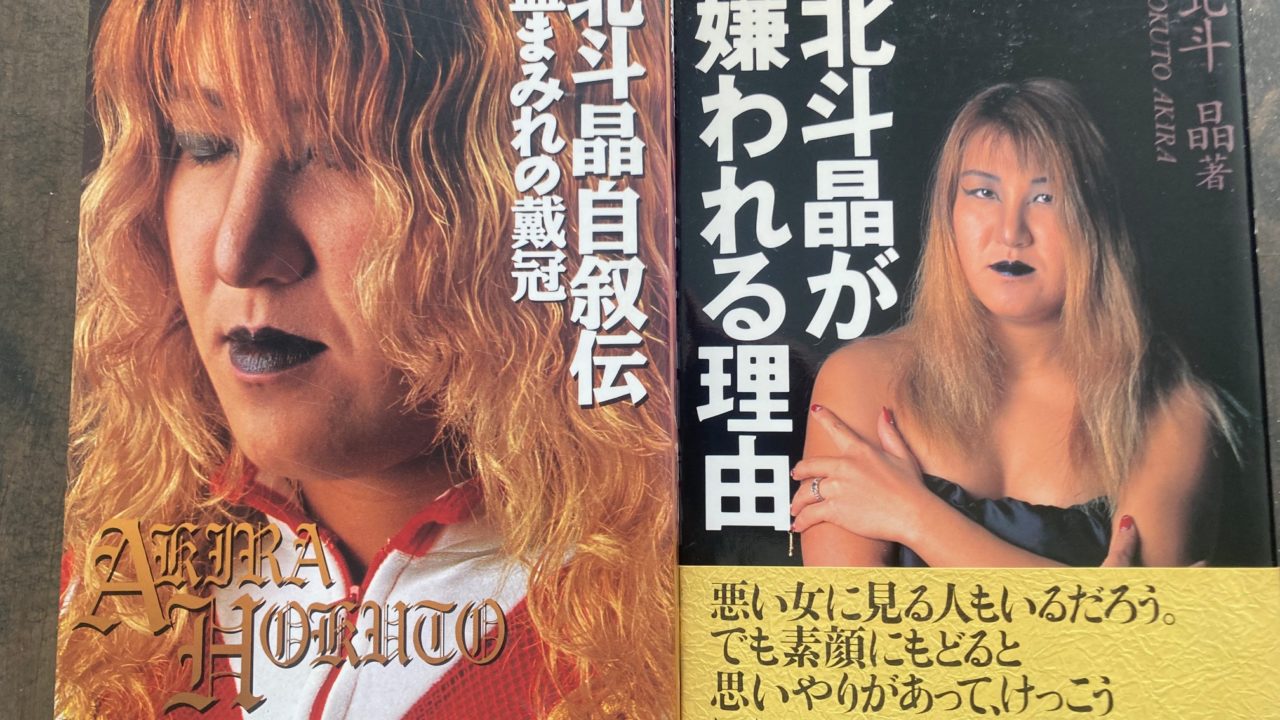
Part 4: The Piledriver seen around the world
April 27, 1987. The night Hisako Uno experienced the terror of “death”. The instance she came closest to understanding both the fragility and strength of human life.
On that night, a sudden tag title is announced with Hisako & Hotta defending against Yumi Ogura and Kazue Nagahori. Hisako suspects this sudden change in plans is due to her runaway incident; incidentally, she also suspects her & Hotta winning those belts made the belts shine brighter and thus make them more appealing to their seniors. Hisako also feels bad for Hotta, who was taking extra heat because of her association with Hotta even though she was far more easy-going as a person.
Hisako recalls going into this match unfocused and without passion. The mixture of fear of her seniors and guilt toward Hotta left her unaware of what her opponents had planned. Then Nagahori lifted Hisako to Ogura who was standing on the second rope.
And then Ogura HITS A DIVING TOMBSTONE PILEDRIVER FROM THE SECOND ROPE!
Hisako doesn’t remember the impact but later on she was sold she suffered two broken cervical vertebrae. But since no one knew of understood the severity of the injury, Hisako continues the match holding her head in place with one hand.
“Why was I able to stand up even though my neck was broken? Why was I able to continue the match? Even I find it mysterious. My body shouldn’t have been able to stand, but maybe my soul, which had left me just after stepping into the ring, returned to me and made my body stand up. Maybe, in the midst of fighting, my soul as a pro wrestler flared up. And at that time, my soul as a human being was gradually fading away.” – Akira Hokuto
After the match ends Hisako loses consciousness. Her strange breathing spurs them to call an ambulance which takes her to Tominage Neurosurgery Hospital. When she wakes up she’s met by Bull Nakano and Aja Kong. But before she can properly respond she feels like her lower body has been cut off. She looks down to check and sees her body still there yet she feels nothing. Not even an itch. Someone could stab her leg and she wouldn’t feel it.
A few days later the doctors tell her their next steps. They would drill holes into her skull and pull her neck back into place using traction. But for two months she would not be able to move and then after that they’d perform another surgery to help her sit up. As a sort of compromise, rather than shave her entire ahead the staff agree to give her a Mohawk. As they prepare the first surgery she’s given anesthesia but she’s still conscious enough to hear them talking. She recalls comments like “she’s done for” (in relation to wrestling), “as long as she can walk, that’s enough”, and that had AJW put her on a bus and sent back to Tokyo as originally planned, she’d have died before making it to the hospital.
After the first procedure, Hisako finds herself in a different kind of living hell: unable to move her body in a room with seven other people, all of whom are in vegetative states, loud machines keeping them alive and Hisako awake night after night. With time her veins harden so they have to move her IV from one place to another until they’re forced to slap the back of her hand and insert the needle there. Like Eiji “Hayabusa” Ezaki would experience fourteen years later, Hisako Uno goes from living a life filled with movement to not even being able to turn herself over, never mind relive herself like a normal person. Besides basic food and water she finds herself taking sleeping pills and tranquilizers, which leave her wondering if she’ll even be able to walk.
After a month, Hisako regains the ability to eat while sitting but has no appetite. She makes one selfish request to call her family, which is granted as several nurses carefully move her bed to a nearby phone. Both of her parents and her older sister come take care of her. As the temperature increases so too does Hisako’s temper as she vents her stress on the nurses and people around her. Her frustrated soul is soothed a bit when Fumie Kanzaki, one of her fellow trainees, quits AJW due to her body not keeping up, and keeps Hisako company until she starts a new job as an office worker. Then a few days before her second surgery another surprise visitor arrives: Yumi Ogura, who, in Hisako’s mind, might actually be an even bigger victim in this situation:
“Pro wrestling is a sport, but at the same time, it’s not just a sport. In an accident that happens there, there is no real victim or perpetrator. However, the world divides two wrestlers with those words. The “perpetrator” was Yumiko Ogura, who used a dangerous move—a piledriver from the second rope—on a rookie, breaking her neck. The “victim” was Hisako Uno, the rookie who had the dangerous move performed on her, broke her neck, and ended up bedridden. That’s how the world saw it. But I think the human heart is much, much more fragile than the body. My own heart couldn’t remain normal. And I think Ogura-san’s heart, thinking “I did this!”, was even less able to remain normal. She must have received a lot of criticism from fans, and I think the real victim in terms of the heart was Yumiko Ogura.” – Akira Hokuto
In a surprising turn, Ogura doesn’t apologize; instead she asks Hisako if she’s okay and hands her a gift: a black and white swimsuit, which Hisako interprets as being something she’d wear back in the ring. This leads to Hisako saying she’s sorry instead and her mindset shifts when it comes to injuries:
“From this moment on, I started to think that it’s not the one who causes the injury who is at fault, but rather the wrestler whose body is prone to injury. Looking back, I had only trained my neck—the most important part of a wrestler’s body—a little during practice. As for this accident, one could say it was inevitable if a rookie who barely knows how to take a fall says she’ll try any move, but once you’re in the ring, there’s no senior or junior, no rookie, mid-level, or veteran. I believe that anyone who doesn’t have a body and confidence that can withstand any move shouldn’t get in the ring. The injured person suffers from the pain, but the one who caused the injury feels heartache every time they see the wounded opponent or hear criticism from those around them. Physical wounds heal to some extent, but emotional wounds remain deep.” – Akira Hokuto
Around the time of her second surgery Hisako is presented with the opportunity to wear a halo vest which would, with time, enable her to start walking again. Though she had spent the prior two months looking forward to any opportunity to move, the sight of the halo vest fills her with “immeasurable fear”. If she tried to walk she’d have to do so with someone’s help. If she slipped and fell while wearing the halo the rods could drive into her brain and kill her. If she hit her head against a wall her life could likewise be at risk.
The second surgery takes place and Hisako is given the maximum amount of anesthetic allowed. The pain gradually subsides but her eyes remain open. After an untold amount of time, Hisako reawakens to find herself no longer able to sleep with her back against the bed until the vest is removed. Feeling betrayed that she can’t even move a single thing despite the doctors’ and nurses’ promises, Hisako shouts and causes a huge commotion, screaming and ranting almost like a toddler having a temper tantrum. She even became afraid of sleep, worrying that the next time she awoke she’d be in an even worse state. The staff members try to calm her down with random subjects but Hisako continues causing a commotion, until an older nurse starts telling her about one of the men in the room with her. This man is a 26-year-old truck driver with a wife and young daughter…and an accident leaves him in a vegetative state. Still his family comes to visit him, including on this one particular day:
“His wife and daughter—the baby was a girl—come to visit him every day. His daughter claps her hands and talks to him, saying, ‘Papa, Papa.’ She’s still little, so she speaks with a lisp, and when she says, ‘Papa, Papa, you know…’ he cries. People say that those in a vegetative state don’t feel anything, that their brains are dead, but he cries. And it’s when his daughter calls him ‘Papa.’ Isn’t it wonderful to be alive? Even if you don’t understand, you can feel it. He was looking forward to his baby being born, and he’s happy about his daughter, I’m sure. People who can live don’t understand, people who can see don’t understand, people who can walk don’t understand how hard it is for him. We don’t understand either.”
Hearing this story and recalling vague memories of a young girl saying “Papa” moves Hisako and she apologizes. Then her rehabilitation begins. The first time she stands she can’t support herself with her own legs. The ordeal leaves her significantly thinner, most of her muscles gone or weakened. Fifteen kilograms of muscle tone was gone yet soon she manages to stand and move herself forward.
Over time, Hisako looks for any sort of outlet to maintain her sanity and finds one doing something forbidden: feeding pigeons. To prevent their germs from getting anywhere they shouldn’t (like in the HOLES IN HER SKULL) everyone is told not to feed the pigeons. Yet Hisako does this, hiding some of her daily bread and giving it to the growing number of birds gathering on her windowsill. In an eerie coincidence, a few days later she hears talk of Hidekazu Akai, the Rocky of Naniwa, a boxer who lost a professional fight and, like her, ended up in this same hospital with a serious injury (in his case, a cerebral hemorrhage). Though he never boxed again, he found a career in entertainment. Hisako interprets this story as her being told she’ll never be able to wrestle again, which leads to suicidal ideation. She goes quite far with it as well, managing to open the window wide enough for her to fit through. But by rattling the window open she attracts the pigeons who think it’s feeding time. This in turn causes the hospital housekeeper to scold her once again, this time with more urgency as she realizes what Hisako’s doing and summons the nurses who inject her with painkiller. In hindsight, Hisako concludes that those pigeons saved her life: had the housekeeper never shown up in response to their fluttering, Hisako would’ve jumped out the hospital window and died at the tender age of nineteen.
Days later Hisako’s primary doctor gives her his prognosis. Good news and bad news. The good news is that she’ll be able to walk again. The bad news is that she can never wrestle again. If she did and something happened he’d be held responsible and lose his license. She’s also warned that she’ll likely have leg problems by age thirty and they won’t know whether or not the surgery was 100% successful until the day she dies. And then she’s told there will be an omnipresent possibility that one day she’ll end up in a wheelchair. However, soon afterwards Hisako learns of the life of Hellen Keller and concludes that if Keller could overcome three different disabilities, she can get back in the ring.
She starts with intensive and difficult physical rehabilitation to learn to walk. A belt is wrapped around her waist to help the doctor control her, giving her the impression of being a human dog. After a week she manages to walk down a hallway by herself. Soon after she progresses enough to walk outside in Osaka, after which she concludes that, despite her ordeal, she doesn’t want an ordinary life. She sidetracks a bit into a short conversation about love and states she loves pro wrestling, even if she can’t do it anymore. As her third surgery – the one to remove the halo vest – approaches, Hisako thanks everyone around her, including the doctors, the nurses, and the pigeons. She also develops a strange “relationship” with the halo vest: even though it kept her body alive, in her mind the best way she can repay its kindness is by smashing it into pieces with a hammer. This surgery goes by much more quickly and Hisako is given a corset to help her neck muscles recover after a long period of inactivity. As she’s gradually given smaller and smaller corsets she spends more time talking with and listening to the elderly patients having gained a newfound patience and respect for them.
More time passes and Hisako starts lifting small weights and walking up stairs to regain her muscles. Then one day she jokes with the head doctor about her being discharged and she surprises her by telling her she’ll be able to leave in a week’s time. Hisako’s overjoyed but also very appreciative of the staff who’d taken care of her and of the others in the hospital who had been patient with her. The day before her departure she learns of that hospital’s sticker system: some people have just their names, others have their names plus a green sticker and others still have a red one. Hisako had a red one which a nurse explains means “someone who is close to death”. Incidentally all the people she initially shared a room with also had red stickers. She closes this chapter thanking everyone at the Tominaga Neurosurgery Clinic in Osaka from the bottom of her heart.
APOD: Just like with the first section I couldn’t turn away from Hokuto’s book once I started here. There’s something in her writing that makes it closer and relatable, which is in stark contrast to many of the previous books, particularly those written by journalists and reporters who have a very noticeable distance to them. Here Hokuto sounds genuine and truly earnest in her feelings and experiences…and my God were her recollections harrowing. That Tombstone could’ve very easily killed her yet she survived it by the skin of her teeth. Much has been written about Hokuto’s toughness already but now we have the women’s firsthand experiences. But what hasn’t been spotlighted as much is the woman’s physical and mental anguish as she tried to recover as best she could. She struggled to sleep on some night, had no appetite for food on others, and lost the will to live after a certain amount of time. Time wise it doesn’t seem like much compared to similar wrestler injuries since she was back in the ring within eight months. That said, she was only nineteen when this happened; for any young adult to experiences such a life-altering set of events is horrifying. It was another reminder of the cold and unsympathetic nature of the business while Hokuto’s passion and dedication was the only shining light leading her through the darkest chapter of her life.
As always, thanks for reading.