

5-Star BOOK Reviews: Akira Hokuto’s Books, Part VII (Hokuto vs. Kandori Dream Slam Edition)
By Alex Podgorski on 13 April 2026
Welcome back to my coverage of Akira Hokuto’s books. This next section is the one I’ve been looking forward to the most: Hokuto versus Shinobu Kandori from AJW Dream Slam I in 1993. It’s one of the greatest pro wrestling matches of all time. It’s also the match that led to her autobiography’s namesake, “Blood-soaked Coronation/Crown of Blood”. In his first book, Rossy Ogawa described this as “the clash of the century”. When I first saw it I thought it was hella fun and have it ****3/4. But then I rewatched it and it just got better each time. Now, not only is it a sure-fire ***** epic, it’s quite possibly the best women’s wrestling match of all time and one of the best matches ever, period. It has topped many a list of GOAT matches and it cemented Hokuto as a legendary performer. It’s also one of the most physically intense matches I’ve ever seen: both women threw live rounds at each other and seemed to wrestle with genuine malice. Up to this point much of the talk around this match came from limited sources like the Rossy Ogawa-Fumi Saito-Dave Meltzer pipeline and some online chatter here and there. Now, though, we get Hokuto’s thoughts on the match from the woman herself.
You can read part 1 here, part 2 here, part 3 here, part 4 here, part 5 here, and part 6 here.
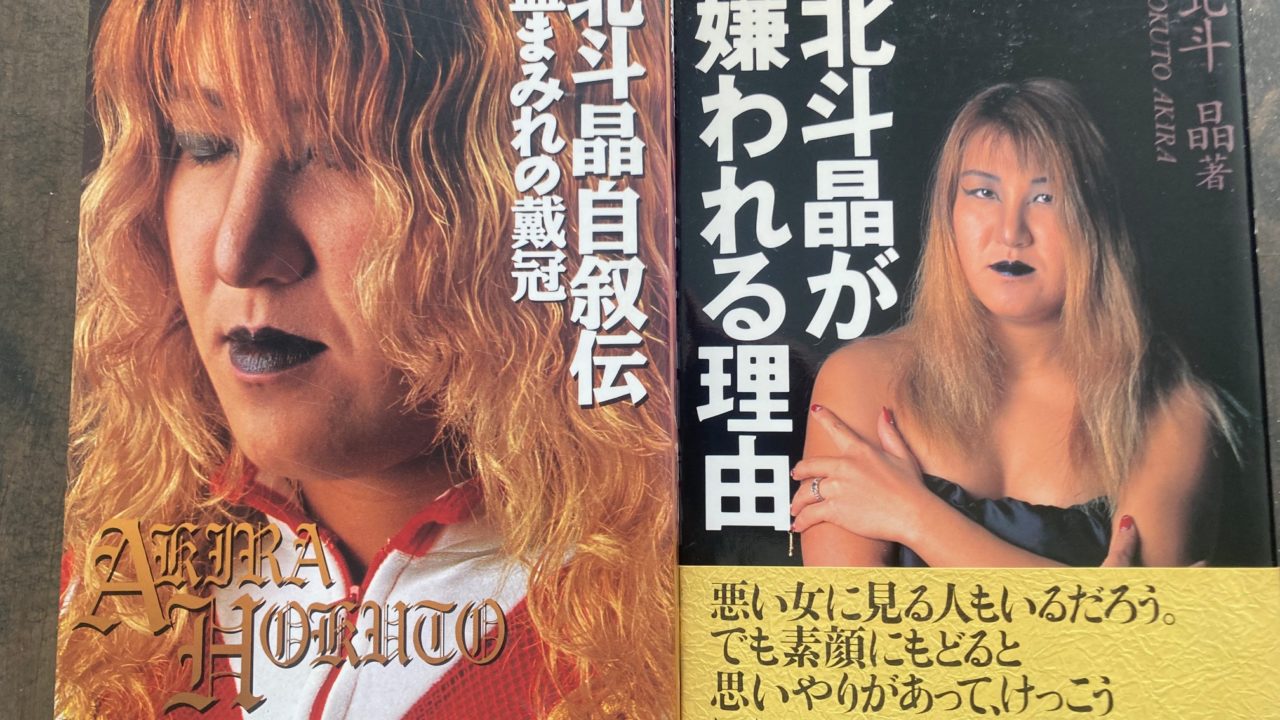
Part 7: The Crown of Blood
Hokuto begins with an explanation of the Interpromotional War period that began in 1992. According to her, the inter-company cooperation between the joshi promotions began with Shark Tsuchiya and Crusher Maedomari challenging WWWA Champions Manami Toyota & Toshiyo Yamada on July 15, 1992 (APOD: The same night on which Hokuto challenges Bull Nakano for the CMLL Women’s title) [Updated. Thanks, Manji]. There is a bit of inconsistency on this, as the real first match that signals the start of this era is Toyota & Yamada vs. JWP’s Dynamite Kansai & Mayumi Ozaki on November 26, 1992 at Dream Rush in Kawasaki. Hokuto dismisses this commotion at first since it has nothing to do with her. But when Bull Nakano starts getting mad over this idea of outsiders challenging AJW’s champions, Hokuto perspective changes and she rallies behind her coworkers against these outside invaders. This leads to a strange bedfellows situation with Hokuto teaming with Nakano on occasion, despite her promise to never do so again following their cage deathmatch. There’s a silver lining for her, though, as she wrestles in a stadium for the first time on the 30,000-attendee FMW 3rd Anniversary show in September 1992.
This match sees her wrestle Megumi Kudo and Combat Toyoda, whom she remembers as AJW dropouts. Hokuto recalls feeling disappointed in their match and notes Nakano had an easy time getting the pin for the AJW side. Her only bit of fun in this match is being able to say whatever she wants in her post-match comments.
Two months later, the fuse gets lit.
As the Interpromotional Era takes off, fans see participation from three of the four companies promoting women’s wrestling: AJW, FMW, and JWP. The fourth, LLPW (Ladies’ Legend Pro-Wrestling) doesn’t take part. The big day comes: Dream Rush in Kawasaki. On that night Hokuto is set to challenge Kyoko Inoue for the All Pacific title but there’s something bothering her. Normally Hokuto doesn’t read wrestling magazines unless they’re about her, and even then it’s usually only a glance. However, earlier on the 26th a magazine catches her eye and in it there’s a small article about AJW. It includes comments from LLPW’s Shinobu Kandori who, when asked to give her opinion of AJW she responds, “I have no interest in current All Japan Women’s Pro-Wrestling.” This comment infuriates Hokuto as it severely wounds her wrestler’s pride and she also sees it as a direct insult to her peers as well. Even though they don’t always get along, she still feels connected to her fellow AJW women as a sort of sisterhood. In particular, Hokuto feels proud that “her” AJW has become less about popularity with junior and high school girls and more about fighting women’s warriors. She puts over AJW women’s pride and passion, how they’d put in so much effort even in front of crowds of only 100 people. Kandori’s comments leave Hokuto “in a haze” and unenthusiastic about her match with Inoue. She also falsely states that her match with Inoue was in the first half when in fact it was sixth on an eight-match card.
Hokuto wins the match and the title, but before she can bask in her victory her LCO stablemates point out Kandori sitting in the crowd. Hokuto recalls seeing Kandori for the first time many years earlier when Hokuto was still a rookie and she barged into AJW’s dojo challenging Chigusa Nagayo to a fight. Such talks ended with Nagayo’s retirement so Hokuto was left thinking Kandori was some kind of yakuza thug looking to scrap. Back in the present, Hokuto sees that Kandori hadn’t changed since then, still looking “gorilla-faced”. She calls Kandori out right then and there and dares her to enter the AJW ring. Kandori enters, along with ex-AJW referee Shiro Abe and Harley Saito. Kandori says something but Hokuto doesn’t hear all of it, only the end which is “come to our ring”, meaning LLPW’s.
Hokuto pivots to talking about 1993. She calls it the year she’s most proud of as a wrestler. She recalls going on the annual AJW tradition of praying at Ootori Shrine but instead of her usual prayer of hoping to make money, this year she hopes to become #1 (and to not cry from injuries). In the weeks since Dream Rush, talks between AJW and LLPW continued. While Kandori remained silent, LLPW’s representative Rumi Kazama spoke on her behalf and fanned the flames of a possible match. Another voice in this was Harley Saito, who tried to, depending on your interpretation, rile up or bury Hokuto by claiming she would get destroyed by LLPW’s rookies (APOD: JWP was originally one company but because of internal politics it split internally into two new entities: JWP Joshi Puroresu and LLPW. In response to these written and verbal taunts, Hokuto, Mita, and Shimoda attend an LLPW show at Korakuen Hall. She’s surprised to find seats reserved for her along with a sign bearing her name near the section usually reserved for reporters. Hokuto sees through these little provocations, but while she was boiling inside she stays calm on the outside. She also recalls some excitement in seeing another promotion’s joshi wrestling having never watched any, but she’s quickly disappointed. She describes LLPW’s wrestling as “cold”, which in turn affects the crowd. She soon finds herself yawning from the boring wrestling. Worse, when she asks a reporter if this is normal, he responds by telling her that everyone there that day is fired up because she’s there. Hokuto gets ready to leave when Kandori appears and Hokuto sits back down, feeling Kandori’s threatening aura. Kandori wins a gauntlet over five other women but still concludes about LLPW that the appetizers and soup were terrible and the main dish was so-so. Then Harley Saito beckons Hokuto into the LLPW ring. Hokuto enters the ring but tells Saito that her match was boring to which Saito responds with a slap. Of course, Hokuto returns that with her own because that’s her custom.
This leads to a six-woman tag match with LCO beating the trio of Saito, Eagle Sawai, and Miki Handa. Hokuto sees this match as an opportunity to cut down the weeds hiding her prey and to give Shimoda props for winning against someone since she struggled to beat anyone in AJW. After winning, Hokuto beckons Kandori into the ring and talks trash. Kandori responds by throwing her shoes at Hokuto.
Shinobu Kandori, apparently
Hokuto’s focus on Kandori remains uninterrupted, even as she embarks on another tour of Mexico. She only wrestles twice during that time. Hokuto chalks up this hyperfixation as something akin to a special connection in a past life. Maybe they fought close to the brink of death in a different life, she ponders. She also notes that despite that focus, she didn’t want to learn all that much about her. She is aware of information being shared about this Olympic-level judoka but Hokuto tries to keep that stuff out of her mind and go into their match blind. It’s as though she wants to keep the match with Kandori as this big question mark instead of immersing herself in Kandori to understand her skills and appeal. As an aside, this second Mexico tour ends up being a bust due to a collapse in popularity with little wrestling to do or money to make. During this time, Kandori and Saito face the LCO duo of Mita & Shimoda and beat them handily.
Hokuto returns to Japan in time for the Dream Slam press conference which is a grandiose occasion given AJW’s 25th anniversary and this four-company cooperation. A 1994 joshi book Definitive Edition! Women’s Pro Wrestling Reader by freelance wrestling writer Takashi Higashi notes that as part of the event’s special nature, each match is given its own title. This encounter is titled the “Dangerous Queen Decider Match”.
Hokuto, as usual, gets bored with the pomp and slow procession of events. When she and Kandori to sit down and begin their press conference, neither one holds back:
Hokuto: “I think Kandori is a pitiful person. ‘Strongest in women’s pro wrestling history’—who’s saying that? Is she saying it herself? I don’t know, but on April 2nd, I’ll rip off her mask.”
Kandori: “You’d better start toughening up your bones now. In Yokohama, I’ll break at least one of your bones.”
Hokuto: “In Mexico, there are so many joint techniques it’s ridiculous. I came here to study them. I’m going to see just how far her joints can go. I bet there are a ton of moves she doesn’t know. You’d better study up, Kandori.”
Kandori: (When asked by a reporter for her impression of Akira Hokuto as a wrestler) “She’s got a sharp tongue, that’s for sure.”
Kandori’s final words anger Hokuto so she splashes water in Kandori’s face. This leads to a scuffle, another shoe being thrown, and Hokuto’s underwear being exposed for a brief moment.
Dream Slam arrives and Hokuto enters the venue after a sleepless night. Yet she isn’t restless like usual, but calm and composed. Five or so hours go by as Hokuto participates in interviews, ceremonies, and rehearsals. Hokuto observes many of her juniors frantically preparing for the big show; she, however, doesn’t even bother having her hair done. Despite going through such big ceremonies and everyone working for the common good of AJW’s success, Hokuto remains focused on herself. Even though Dream Slam had been built on this AJW-versus-the-world dynamic, she sees her match with Kandori as a purely selfish gambit. For her this was necessary: the added pressure of protecting company pride would’ve constrained her and she wouldn’t fight at 100%. In other words, Hokuto faced Kandori in a match that was outside the boundaries of her promotion.
As she waits for her match to come Hokuto dozes off for a bit and ends up dreaming that she lost and was lying spread eagle on the mat. When she awakens she puts on a costume that a fan had made for her and realizes it was 11pm, meaning she had been in the venue for twelve hours.
The bell rings. Trash-talk ensues. “Come on, try it!” “Bring it on!” Irrationally angry, Hokuto throws a STIFF punch at Kandori which she claims is an expression of her emotions coming out. Minutes later Kandori traps Hokuto in a shoot armbar and Hokuto describes feeling “grinding”. Terrifying pain and numbness shoot down to her fingertips. Hokuto’s shoulder looks to have popped out of its socket. She says this happens often so she plays it cool and pretends nothing really happened (APOD: One of the YouTube videos of Dream Slam has English subtitles for the wrestlers talking and Hokuto responds to Kandori by telling her, “I want you to break it, idiot!”). Around ten minutes in they brawl into the stands and Hokuto attempts a piledriver on a ringside table. But then Kandori reverses it and spikes Hokuto instead. This leads to an absolute gusher of a blade job, one that quickly leaves Hokuto, as the name of this book suggested from the start, crowned in blood.
The tables at Yokohama Arena are closer to cement than wood, and I could feel my head sink into the table. When I came to, blood was running down my hair like I was taking a shower, dripping onto the ground in thick, red drops. It felt like boiling water was being poured over my head. Blood gushed out. The blood kept flowing, never stopping. My eyes were blocked by blood, and I couldn’t see what was in front of me. I could feel the blood draining from my body. Nausea hit me. I felt dizzy and chilled. I’ve been injured many times before, but this was the first time anything like this had happened. – Akira Hokuto
Hokuto’s bleeding leaves her unable to keep track of time. She wonders if she’s going to die. She doesn’t remember much of the match after that point. Before she knows it the bell rings and she sees Kandori lying on the mat, spread eagle. She doesn’t recall her post-match promo (in which she calls Kandori a fake pro wrestler judoka wannabee) and skips to finding herself back in the locker room. She describes a hectic scene as her bleeding still hadn’t stopped. Several wet towels quickly turned red once they touched her head. Blood kept dripping out of her head and into a bucket of water. The smell of blood leaves Hokuto and several people around her nauseous. She can’t even shower because doing so would likely exacerbate her wound and she doesn’t think she has the ability to stand up to do so.
“The only time I was ever scared when making the call in the center of the ring was this time, and never before or after. I shivered with a fear I can’t quite describe. In the match, there were hardly any real wrestling moves; it was all punches, kicks, and joint locks. Midway through, Hokuto took a piledriver from Kandori on a table near the broadcast booth and bled profusely from her forehead. Her face, her bleached-blonde hair, her swimsuit, even Kandori’s swimsuit, were all dyed bright red. And then, how many times had it happened? Their punches landed simultaneously, both collapsed, and in the next moment, Hokuto pinned Kandori. After 30 minutes and 35 seconds, the fierce battle finally came to an end.” – Nagaharu Imai, AJW ring announcer, Ken Yanagisawa’s 820-page book on joshi in 1993
(APOD: You can watch that match here. As I said earlier, it’s an undeniable 5-Star masterpiece but one that absolutely shouldn’t be replicated. A few of the books I’ve translated, including some by Ogawa and other Japanese journalists, state that Hokuto was frustrated with how this match ended up. To her there was a lack of chemistry with Kandori which left the match completely disconnected from what she envisioned. But that mismatch is what worked here: the heat between these two led to an absolute barn-burner. And whether you see this match through the lens of AJW versus the world, wrestling versus shooting, or through the more simplified lens of the individuals Akira Hokuto and Shinobu Kandori, this is an epic match the likes of which hasn’t been seen in over thirty years).
By the time Hokuto makes it back to the office it’s 2:30am and the white parts of her costume were all dark red. Unwrapping the towel around her head leads to more fresh blood pouring out of her head. She goes to a nearby hospital to get some anesthetic injections but they didn’t work due to Hokuto’s post-match agitation. It turns out that she had two large wounds on her head which could not close on their own, hence her persistent bleeding and her body’s inability to clot them on its own. The doctor tells her she needs 25 stitches but Hokuto can only handle fifteen before the pain becomes unbearable so the remaining ten are covered with bandages.
I have to skip ahead for a moment because Hokuto touches on the fallout from Dream Slam I in the next chapter but it applies here. This has been discussed many times in other places but despite the quality of Dream Slam I’s wrestling, the show received very negative coverage in the media. Why? Because it went way too long, around five-and-a-half hours. By the time Hokuto and Kandori started their match it was around 11pm local time. Their match went for 30 minutes and then there was another near-half-hour match in the main-event. By the time the show was over and people began leaving the arena it was past midnight. The last trains out of Yokohama station had left, leaving thousands of fans stranded. This fact alone was bad enough with accusations being made that AJW didn’t care about their customers. What made it worse was the incident at Shin-Yokohama station in which over 100 bikes were stolen by desperate fans in need of a way home. In Japan where petty theft is publicly perceived to be nonexistent, this was a huge deal and AJW’s management went to the station to make several public apologies. As for those fans who didn’t want to resort to stealing, they were gouged in another way by taxicabs charging them ¥20,000 (about $200) for one-way fare. Since some fans demanded AJW management refund them for those prices, the shows reputation remains tainted and the owners promised to start events earlier (APOD: Monkey’s paw moment: They promised they’d start some events sooner, but when they did the Tokyo Dome show they did indeed start it sooner…and it STILL ended way past midnight. If excess were to be defined by a photo it would be a photo of Vince McMahon around WrestleMania season holding up a photo of the Matsunagas).
Hokuto makes it back to her apartment at 4am and awakens at an unknown time later on, long after the sun has risen. Seeing her reflection in a mirror, with discolored and swollen cheeks, eyelids drooped, and bandages covering her forehead, causes tears hotter than blood to flow. For the first time in a long time, Hokuto feels fear. She starts panicking, calls Ogawa, and threatens to quit, only for Ogawa to calm her down and tell her to wait at least a day or so (APOD: Ogawa confirms this in his 1994 book AJW Is The Best!!!). Later on Hokuto gets a call from her father who, along with her mother and sisters, attended Dream Slam in person. Out of habit she tells him that she’s okay but he’s legitimately worried that she might’ve died. She responds by telling him that she wants to quit and her father understands (APOD: By this point Hokuto has talked about quitting so many times that it’s really starting to come across as a hollow threat).
Later that day, Hokuto reluctantly goes to the office for an interview with a sports magazine. She appears still dressed in the same costume from the night before, her blood now dried and caked all over the place. After the interview, she asks president Kunimatsu Matsunaga to let her quit. He was expecting as such, but before any decision could be finalized Hokuto finds herself booked in a tag match alongside Aja Kong versus Kandori and Sawai at Dream Slam II on April 11th. As she prepared for this, the president tells her that if she quits now people will think she’ll have run away from Kandori. This convinces her to stay for that rematch, and then she’ll never wrestle again afterwards (APOD: LOL, if there was ever a poster child for “never say never”…). Spurred on by the prospect of a rematch and to help her AJW comrades as they dealt with growing roster injuries, Hokuto goes into this match with gusto. During the match Kandori yakuza kicks Hokuto which reopens her forehead wound. The amount of blood she loses causes her to feel that same fear again. It’s this fear that Hokuto suggests causes her to lose the match. However, even though Kandori also locks in another armbar on that same weakened arm, Hokuto refuses to give up and uses this as a pretext to continue wrestling. She also vows to have one more match with Kandori, to be decided later on that year.
APOD: This was a rollercoaster of a chapter with some interesting perspectives on one of the greatest matches of all time. Hokuto rebuking the match’s framing as AJW-versus-everyone and simplifying it into a personal grudge match was surprising, yet we can’t forget that her anger towards Kandori’s comments were built on Kandori’s disinterest towards AJW at the time. Since we’re looking at these events from Hokuto’s perspective, we can only know what her thoughts were. I don’t know if Kandori’s comments were legit or kayfabed to possibly build towards such an encounter. But what is certain is Hokuto got riled up so badly that she essentially “worked herself into a shoot” and got so mad she almost got killed. The closest American equivalent I can think of here is the 2012 feud between John Cena and Brock Lesnar if Cena legitimately got in Lesnar’s face and decided to throw hands for real. Lesnar, for all that’s been said of him, knows how to do business, yet if anyone was dumb enough to try him for real he’d get obliterated. At the same time, Hokuto omitted the important part that she didn’t blade on that Tombstone spot; someone else did. Now, obviously at the time Hokuto couldn’t reveal the truth on that; even now Japan retains a modicum of understanding that pro wrestling has some degree of realism so the idea of a full peek-back-the-curtain-and-expose-everything shoot doesn’t exist. Yet that errant blade job by – I believe – referee Matsunaga is what caused Hokuto’s bleeding to get out of hand. Yes, that blood added to the drama, but the way it cut made it a bit too sickening. While it wasn’t as bad as the Muta Scale match or Eddy Guerrero vs JBL, it’s probably the bloodiest women’s match ever seen on a major stage. For all Hokuto’s self-doubts, moments of reluctance, and insistence on giving up, this match remains her unquestioned career peak. It’s no wonder that, going forward, she would be known as “The Dangerous Queen”.
As always, thanks for reading.