

5-Star BOOK Reviews: Akira Hokuto’s Books, Part VI
By Alex Podgorski on 10 April 2026
This next section will cover a short but important period in Akira Hokuto’s career: her first trip to Mexico. Foreign excursion is an integral part of many a Japanese wrestler’s career, and has been an institutional expectation for decades. The vast majority of Japanese wrestlers spent anywhere from several months to a few years abroad learning how to wrestle different styles and, more importantly, how to communicate with audiences without knowing the local language and thus being forced to express oneself in other means. This is a crucial skill for wrestlers as nonverbal artists, but for Akira Hokuto it was something of a concerning affair. In the last section she was approaching this excursion with mixed feelings as she had been told that those departing “weren’t needed”. Little did she know that this first trip would end up having influence on her career.
You can read part 1 here, part 2 here, part 3 here, part 4 here, and part 5 here.
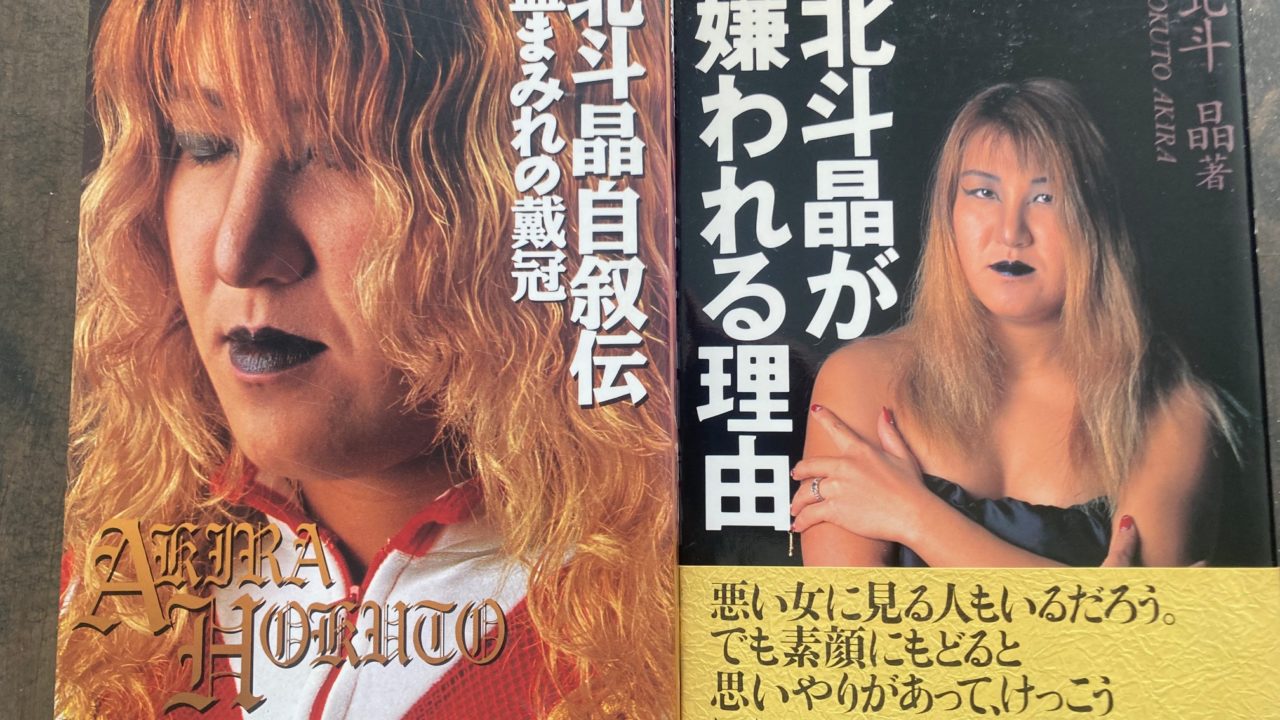
Part 6: Akira Hokuto in Mexico
This trip marks Hokuto’s first real trip with herself in charge since she’s the senior with her junior Etsuko Mita. Rossy Ogawa accompanies them for about a week and then returns to Japan. Hokuto encounters a problem right away in the language barrier: she understands a little English but nothing in Spanish. Anxiety over this inevitable communication barrier leaves her worrying about the trip, along with stories she’d been told from other joshis returning from there. Compared to Japan, Mexico is perceived as a dirty and dangerous country which makes her think, “I wouldn’t mind getting seriously injured right now.” She uses this opportunity to reflect on her strengths and weaknesses as a person, and concludes she’s a weak person.
The first thing that hits her is the overwhelming smell in the air: the combination of exhaust fumes and Mexico’s high altitude thinning the air leaves her feeling uneasy. Then she encounters the man who’ll be taking care of her: Jose Peonono, whom she calls the Rossy Ogawa of the Mexican promotion. There’s an instant problem as he only knew a few Japanese words like “baka” (idiot), “dame” (no good), and “watashi, yopparai” (I am drunk).
Hokuto’s anxieties lighten when she visits Arena Coliseo for the first time. Here she notices distinctions in Mexican wrestling for the first time, namely how two-out-of-three falls matches are structured differently in terms of content and action levels. She also notes how main-event wrestlers barely move compared to lower-card matches yet that’s enough for them to be over. But most importantly she perceives that the Mexican wrestlers are actually enjoying themselves. Seeing these wrestlers doing their thing with such passion soothes Hokuto’s concerns and helps her previous preconceptions fade away.
To make them stand out, Hokuto and Mita are introduced as “Las Cachorras Orientales”, which is said to mean “Children of the Oriental Beast” but in actuality comes to mean “The Oriental Bitches”. Hokuto starts wearing a kabuki costume and holding a wooden sword while Mita wears a happi coat and carries a Japanese flag. This big show of being Japanese gets them more boos than expected yet it fills her with joy. Being a Mexican ruda was more satisfying than being a typical Japanese heel:
The Japanese heel is boxed in by rules—if you get angry, it’s a foul, and if you go further, it’s bloodshed, all done to be hated. Even though I had no sense of doing anything bad, in the eyes of the audience, everything the Mexican ruda did looked outrageously evil. The Mexican ruda truly fought freely and as they liked—that’s how it seemed to me. – Akira Hokuto
However, one thing that bothers Hokuto is that in Mexico there are banned moves. Specifically the piledriver is forbidden. And since her finisher the Northern Lights Bomb is more dangerous than a standard piledriver – she notes that someone could die from it – she risks not being allowed to wrestle at all if she were to use it. (APOD: This is, unfortunately, the first mention of Hokuto’s famous finisher. There’s no deep dive into how she created it or why, which is unusual given that every single one of these wrestlers whose books I translated goes into extensive detail about how their moves all came about.) There’s a nice little bit of contrast with this as Hokuto’s next big moment is climbing the Pyramid of the Sun at Teotihuacan and feeling so incredibly free once at the top.
When Ogawa departs for Japan Hokuto feels worried as now she’s truly in charge and responsible for both herself and Mita. Stressed over keeping up appearances and to keep Mita from developing anxiety, Hokuto does her best to learn Spanish quickly which helps in both their daily lives and in the ring. This proves to be a critical asset as Hokuto further finds herself unconstrained as a wrestler. She goes deeper into the contrast between training in Japan and Mexico: in the former wrestlers train to become stronger while in the latter they train to not show an unsightly body. Being in this new country helps her understand how wrestlers are being watched so attentively which helps her understand the aesthetic part of the business. She notes that while Japanese wrestlers are at the top when it comes to action, Mexican wrestlers are at the top when it comes to showmanship. Here she distinguishes between doing pro wrestling and showing pro wrestling, and the latter is her biggest lesson from this voyage.
To make sure everyone in the audience, including those far away from the ring, could understand her as a wrestler, Hokuto deconstructs various aspects of her wrestling self. Painting her face helps her face stand out more. Painting her nails black make her intricate hand techniques more visible. Changing her attire color scheme from blue to black adds more character. She grows her hair out to appear more feminine since there are only five matches on any card and of those only one is for women. Even though she doesn’t describe herself as the most beautiful woman, Peonono tells her that she should at least try to look the part for the matches.
After a month-and-a-half, Hokuto and Mita return to Japan and apply their lessons in a tag match against Jungle Jack. Hokuto notices that Mita’s previous weak-heartedness is gone and she no longer needs any help with the small stuff. Despite the two of them losing, Hokuto doesn’t feel any sense of despair as Mita has shown growth. Hokuto concludes that the real Akira Hokuto the wrestler was, in fact, born in Mexico and that is her home.
Las Cacchoras Orientales
Around the time of her return, AJW’s locker room is divided into three groups: Jungle Jack, Gokumon-to, and the babyfaces. Hokuto and Mita, as heels, changed in Gokumon-to’s dressing room. AJW management approach Hokuto asking her what she wants to do with Mita, her junior. Hokuto tells them to ask her and she said she wants to follow Hokuto further. This ended up having booking consequences as Mita would wrestle more in tag matches than Hokuto and would also take falls for her side. Dealing with these parameters leaves Hokuto distracted which leads to her breaking a rib. But despite having a hard time breathing, Hokuto faces Bull Nakano for the CMLL World Women’s Title in July. Before the match, though, Hokuto asks for a painkiller injection to the chest area, twice the normal dose. Since it doesn’t seem to work, Hokuto demands another injection. The doctor refuses and at first she seems ok with just that one dose.
As all of this is happening, Hokuto finds herself dealing with another matter giving her a headache. Because this is for a Mexican title there are Mexican rules to follow. In this case, there is a commemorative photo op done before the match starts with the combatants, the referee, and their seconds. At the time Nakano had three while Hokuto only had one, feeling that no one besides Mita was worthy to follow her. Hokuto’s reluctance to add anymore seconds to her photo shoot causes a delay in proceedings until a familiar voice grabs a microphone and asks to join Hokuto. It’s Mima Shimoda. Shimoda pleads to be one of Hokuto’s seconds despite having rarely interacted with her before. But Shimoda’s pleas garner sympathy from the crowd. Hokuto initially refuses which makes Shimoda cry. Fans insist that she change her mind and, combined with growing delays of the title bout, Hokuto reluctantly agrees.
All of this happens over the course of ten minutes, ten crucial minutes that chipped away at Hokuto’s painkillers. Because she’s on a timer, Hokuto decides to wrestle with a strategy this time instead of her usual way of going with the flow. She decides to hit Nakano with an early Backdrop suplex but doing so makes her heart beat faster which in turn leads to the nausea the doctor warned her about. Since she hadn’t eaten all day to avoid her stomach from pushing against her broken rib, the only thing in her stomach was painkillers. Hokuto’s recollection of the match is murky but still describes Mita getting the doctor to have the referee stop the match. Hokuto still tries to keep fighting but her seconds stop her since she’s in no physical condition to continue. That’s proven minutes after she makes it backstage: the painkillers wear off completely. Still, though she’s bitter about feeling humiliated for needing her seconds’ help, Hokuto notes that they saved her health and notes an underlying gratitude towards them.
Hokuto observes a noted change in both Mita and Shimoda. Previously she considered Shimoda a slacker who barely trained and spent her time on the tour bus reading and sleeping. But once they join her they begin training much harder which leads to a wider reflection of their time. Shimoda and Mita debuted in 1987 alongside Manami Toyota and Toshiyo Yamada, both of whom were being pushed far more prominently and consistently by the company. There’s even said to be a musical number by Toyota and Mita together (APOD: which sounds like an awful idea given Toyota’s noted aloofness and her pronounced Shimane accent sounding nothing like an idol’s voice). To Hokuto, Mita and Shimoda were treated like wrestling dropouts; far beneath their peers in every conceivable way. And even though she was already a senior, Hokuto saw herself in similar colors. A trio of misfits, the three of them. Still Hokuto hesitates in becoming their leader, owing to a lack of self-confidence and a reluctance to give up her wrestling freedom. Yet before long they’re in six-woman tag matches together. And then another big development happens when she’s offered to challenge Bull Nakano in a cage deathmatch.
Hokuto’s reluctant at first because she had never wrestled in a cage before and Nakano was considered the “queen of the cage match” (APOD: If you’ve ever seen Nakano versus Aja Kong in that cage deathmatch, you know why this is). Realizing this would be a big opportunity for both her and her seconds, Hokuto accepts. The match takes place on July 30, 1992. As an added stipulation, Hokuto vows to take Mita & Shimoda on as her stablemates if she wins and if she loses she’ll join Nakano’s Gokumon-to stable, which would leave the other two women directionless.
The match starts off as an ugly fight more than a match with Nakano using her cage experience to beat Hokuto up and bust her open. But Hokuto uses Nakano’s cage experience to her advantage, knowing what Nakano would try and do (APOD: This is an important thing to understand: it echoes what Misawa wrote in one of his books about how wrestlers aren’t thinking of moves in a vacuum; they’re watching and studying each other, some more than others, to determine how they will wrestle. It’s unwise to think that wrestlers are doing moves haphazardly or without forethought). Sure enough, Nakano goes for her cage guillotine leg drop but Hokuto dodges and lands three Northern Lights Bombs to secure the victory. With that, Hokuto LCO in AJW is cemented as a new force.
APOD: This was a refreshing section that highlighted the difference between Japanese wrestling and other styles. This might be obvious to the viewer but Hokuto’s personal perspective gives it weight. Hokuto’s initial concerns with the language barrier and the stylistic distinctions create more challenges for her to overcome and when she does she leaves a more well-rounded performer. A big part of Hokuto’s appeal as a wrestler is her superstar aura, which she likely wouldn’t have cultivated without her excursion to Mexico. Though she’s right in the notion that Japanese wrestlers excel in the nuts and bolts of the profession, her adding many superstar elements really elevated her into an even bigger star. This helped her work around her many injuries and helped her get away with doing less than, say, Toyota or Yamada, who were being pushed as super-athletes who put more action into their matches than anyone else could keep up with. As for the bit about LCO, it’s a bit subdued and serves more as an explanation about why she chose to team with them and how their formation came about. There isn’t likely to be too much more about those two because, a) this book was published in 1994 and LCO would peak much later on; and b) the next section is MUCH more important since it covers a huge topic in Hokuto versus Shinobu Kandori at Dream Slam.
As always, thanks for reading.