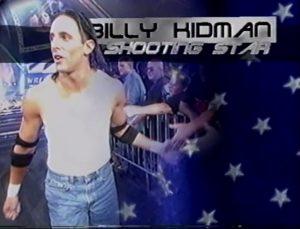
Mike Reviews The WCW Superstar Series – Billy Kidman
By Michael Fitzgerald on 21 August 2026
Happy Friday Everyone!
We’re back with what is, in essence, a VHS review today as we take a look at a recap of the career of Billy Kidman. However, this feature actually aired on pay-per-view rather than being released on video. That sounds odd, so let me explain. Around 1998/99, WCW started making a collection of home videos that featured profiles of the WCW wrestlers. They called this the “Superstar Series” and the initial tapes that came out covered the big stars in the promotion such as Sting, Ric Flair, Randy Savage etc. Some of these tapes even made it over to the UK, which was impressive because we didn’t always get a decent supply of WCW home video content over here, even though we were a reasonably healthy market for WCW at the time.
Ultimately there were four volumes of the Superstar Series that hit the video shelves, with each volume containing two superstars. Volume One for instance featured a section on Sting and a separate section on Goldberg. WCW did go on to make more of these Superstar Series features, but by that point we were moving into the dying days of the promotion so these features never actually got physical releases and were instead released as discounted pay per views, making them not quite lost media, but still pretty obscure. However, thanks to the fine folks at F&C, the Billy Kidman edition of Superstar Series is now available for me to view and I decided to give it a look-see, seeing as I always tended to enjoy Kidman’s work and I would look forward to his bouts whenever he appeared on WCW Worldwide when that show aired on Channel 5 here in the UK.
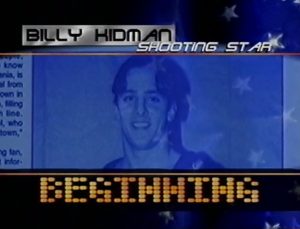
The tape opens with a montage showing clips from Kidman’s career before we take a look at the early days of his journey in the bone-bending game. Kidman discovered a wrestling training school in the basement of a bowling alley run by Afa The Wild Samoan. Kidman was already a big wrestling fan, so when he found out that a wrestling school was near his home, he decided to join up. Kidman apparently hid his Pro Wrestling training from his family at first, but they were eventually supportive when they found out. We then get a funny story of Kidman wrestling as Kid Flash on the indies and almost hitting a promoter with an errant fireball, which he would normally use to give his entrance a bit of extra pizazz. That was a fun story and did a good job of humanising Kidman, which these tapes sometimes fail to do. Eventually Diamond Dallas Page, after much encouragement from Chris Kanyon, brought Eric Bischoff a tape of Kidman doing his Shooting Star Press move. Bischoff was impressed with what he saw that led to The Kid getting a booking.
Kidman wrestled mostly on WCW’s weekend syndicated shows, and got his wrestling name courtesy of Terry Taylor because they wanted something with “Kid” in it due to him being a young fresh faced 21 year old. Kidman mostly ate losses in his matches, and we get to see a montage of him looking at the lights. Kidman showed promise though, and we get clips of Kidman wrestling Psicosis on an episode of Worldwide from the 22nd of July 1996. Psi takes some good bumps for The Kid in there, and the bout looks like a fun quick paced romp that the live crowd enjoys. Granted, these shows were normally taped at Disney, where the fans were given cues to cheer on command, but the reactions seem genuine here. We actually get to see a decent chunk of the match, which wasn’t always the case on these profile features. Eventually Psi misses a charge in the corner and that leads to Kidman snapping off the Shooting Star Press for the three count.
Mike Tenay, ever the historian, notes that Jushin Liger actually invented the Shooting Star Press, and Kidman mentions that he saw footage of Liger doing the move and attempted the move himself. Tenay notes that Kidman has perfected the move, but some would argue with him there as Kidman didn’t always have the cleanest rotation of the move and notably gave Chavo Guerrero Jr a serious injury due to landing one incorrectly in 2004. Still, this is Kidman’s tape, so I understand why they have to big him up, although you could argue that they could have just said that Kidman has his own flavour to delivering the move and leave it at that. We actually see footage of Kidman failing with an SSP attempt against Disco Inferno on Worldwide, where Kidman undershoots the move and gets his legs tangled in the ropes before sadly flopping back into the ring. Thankfully neither Kidman or Disco were hurt and Kidman laughs about it afterwards, again coming across as likable due to having the ability to laugh at himself.
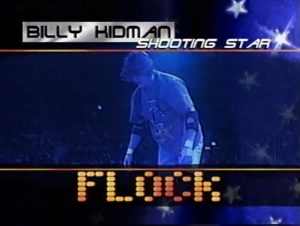
Next up we move onto Kidman’s time in Raven’s Flock, as we see clips of Raven watching a Kidman bout from the crowd during an episode of Worldwide in October 1997. Raven ends up backhanding Kidman, which fires the youngster up and sends him on his way to victory. Kidman notes that working with Raven turned him into more of a regular on television, and we get clips of Kidman hanging around with Flock members Lodi and Reese, whilst Disco Inferno states that he was happy to see The Kid advancing his career. We then get footage from April 1998 on Saturday Night, where Kidman lays a beating on Evan Karagias, whilst continually scratching himself. The scratching was a reference that was totally lost to younger me of course, but as I’ve aged I’ve learnt that it was supposed to imply that Kidman was a heroin junkie. Charming. Well, if anyone knew how to portray that sort of grungy, self-destructive character in the 1990s, it was Raven, so Kidman was in good hands there I guess.
Kidman admits that he didn’t even get the reference himself at the time, but he did decide to change his finisher name to the Seven Year Itch on the suggestion of Chris Jericho. Kidman states that he really didn’t like being in The Flock, even though it got him on television, and he was happy when he was allowed to move on from it. We then get clips from Raven and Saturn’s excellent match at Fall Brawl 1998. Kidman gives Raven a Missile Dropkick and officially turns babyface, leading to Saturn going on to defeat Raven and free The Flock. They present it like Kidman’s interference led directly to the finish, although they actually did more stuff after that bit in the bout, because of course they did. The next night on Nitro, Kidman helps drag Lodi away from Raven, meaning the nihilistic DDT deliverer loses his final follower.
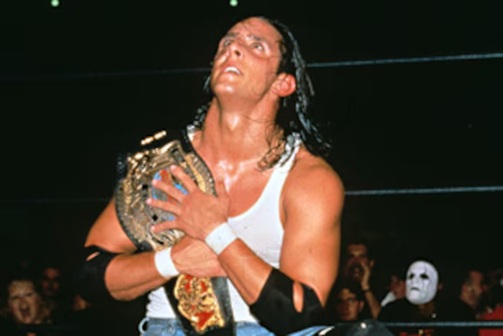
This leads to Kidman filling in for a previously injured Kaz Hayashi to step into the ring against WCW World Cruiserweight Champion Juventud Guerrera on the 14th of September 1998 edition of Monday Nitro, with the belt on the line. Juventud and Kidman had many battles together over their time in WCW, with the standards of the contests always being good due to them having strong chemistry as opponents. This match on Nitro is no different, as the two trade some breathless near falls until Kidman is able to fly through the air with the Shooting Star Press to pick up the three count and the belt. They mostly edit out the Juventud sections of this one and focus on Kidman’s moments of offence. That makes sense seeing as this is a Kidman feature we’re watching, but part of what makes watching a match fun is the give and take aspect, so removing that lessens the enjoyment of the clips somewhat. Kidman gets a good pop for his win and Saturn looks on approvingly, as his freeing of The Flock instantly improves the career of a member of the group.
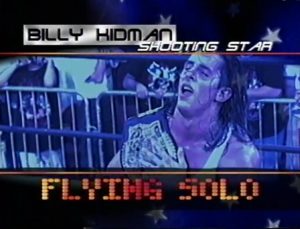
Kidman says that finally winning a belt in WCW was an all-time high for him, and he was happy that he got to have a good match enroute to claiming the championship. We then get pictures of Kidman posing with Charles Barkley whilst his new belt is draped over his shoulder. We then skip ahead roughly seven months to 29th of March 1999 to cover Kidman’s team with Rey Mysterio Jr. I understand that they have time limitations with features like this and you can’t recap absolutely everything. However, by doing this they skip over all of Kidman’s two Cruiserweight Title reigns, including arguably the best one night performance of his career at Starrcade 1998, where he successfully defended his Title twice on the same night. The clips from Kidman and Rey Jr’s bout with Chris Benoit and Dean Malenko on the 29/03/1999 Nitro are entertaining, with Kidman and Rey-Rey forming an effective tandem. Watching Benoit and Malenko fling Rey Jr in particular around is really fun, just because those two so rarely got to powerhouse smaller guys around like that as they were normally the smaller wrestler in the ring themselves. Raven and Saturn end up interfering and that leads to Kidman and Rey-Rey picking up the tag belts.
From that we move onto the 16th August 1999 Nitro, where Kidman talks about hanging around with Rey Jr, Konnan and Eddy Guerrero, officially giving them the name of “The Filthy Animals”. Kidman notes that they were friends in real-life, and the mid-card was being ignored at the time, so they decided to be ignored together. Not mentioned here is how the group supposedly got their name. Apparently The Disco Inferno heard about some of the groups exploits on a night out and said “Oh, you filthy animals!” and the name stuck after that. Kidman says that at first the creative team wouldn’t put The Filthy Animals together, because they were all good wrestlers and they didn’t know who they would wrestle in opposition, which leads to Kidman saying they’d work with anyone and make it work. That leads to Kidman renewing hostilities with old foe Psicosis and battling Psi in a Hair Vs Mask bout on the 27th September 1999 edition of Nitro. This leads to Bobby Heenan worrying about Kidman losing and some of his hair remaining in the ring, causing an oil slick, in classic Brian one-liner fashion.
I have quite a strong memory of watching the Psicosis Vs Kidman bout on Channel 5 here in the UK, and even in my younger days I thought it was dumb to unmask Psicosis seeing as he looked so much cooler with his mask on. Juventud Guerrera arguably looked better without his mask due to his handsome boyish looks, but the likes of Rey Jr and Psicosis just seemed to lose their aura when they were unmasked. Chavo Guerrero Jr and Juventud try to help Psi pick up a victory, but he fights back and eventually wins a good match. One amusing aspect of the whole thing is hearing some of the female fans in the crowd squealing at the thought of the handsome Kidman losing his hair. Psi eventually is unmasked and his cool factor drops roughly 67.27% as a result. Kidman fending off three villains to basically win the mask all by himself helped elevate him somewhat though, as The Animals only show up at the end to rescue Kidman from a three on one beatdown.
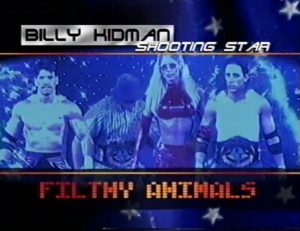
We then move on to Torrie Wilson joining the group, as WCW needed something for her to do and surveyed the locker room on who wanted a manager/valet. The Animals were apparently happy to have someone in their corner, so Wilson ended up joining the crew. This leads to the feature covering the feud between The Revolution and The Filthy Animals, as they also had a woman on their team in the form of the monstrous Asya (named as a play on Chyna, because “China” is a country whilst Asia is an entire continent. Wrestling logic at its finest). The Revolution end up kidnapping Wilson and locking her in a cage. As we’re in November 1999 by this point, and the Vince Russo/Ed Ferrara duo (which I colloquially will refer to as “Russ-Ara”) were booking things, we get a match with an item on a pole, because of course we do. The item in question is a key to the cage that Wilson is locked in, with Eddy Guerrero claiming the key in order to rescue the damsel in distress. It does feel like Kidman himself probably should have been the one to save her, but hey-ho..
The feature has done a decent job of walking the line between shoot and kayfabe, with them never outright saying that wrestling is a work but still not trying to pretend that it’s on the level. This approach is highlighted by Kidman openly admitting that Wilson is his real-life girlfriend. I like that the feature isn’t trying to insult our intelligence but isn’t rubbing the worked nature of wrestling in our face either, it’s a good balance. Wilson says that she likes Kidman because he’s down to earth and doesn’t have the ego usually associated with Pro Wrestlers. Kidman jokes that by the time this feature comes out they might have split up onscreen (indeed they did, as Wilson left Kidman at Great American Bash 2000) but he hopes they’ll still be together offscreen. Thankfully for him, they were, with the relationship lasting several more years
We then move on to Kidman’s feud with Hollywood Hulk Hogan, which started with Hogan making comments that Kidman couldn’t sell out a flea market and that he should stop angling for a better push. This would sound like the setup for The Kid being a fired up young babyface fighting from underneath to prove he belonged against the arrogant established veteran, but instead WCW decided that it would be better with Hogan as the Stone Cold like babyface against the snivelling Heel Kidman, because WCW. Kidman says that it was a great experience to get to fire back against Hogan on the mic, as he didn’t think he’d get the opportunity, and that leads to Kidman brawling with Hogan on the 10th April 2000 edition of Nitro. Hogan of course decimates Kidman (although they don’t show most of it thankfully) but then Eric Bischoff comes down to hit Hogan with a chair so that Kidman can get a tainted three count.
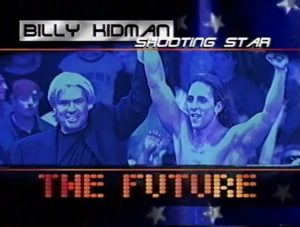
Kidman says that being Bischoff’s right-hand man in a feud with Hulk Hogan was a good feeling, and we get clips of Kidman actually being a pretty decent cocky Heel on the mic during this rivalry. Sadly, the feud never had much chance of working because Hogan made Kidman look like a joke whenever they did anything physical, and the dynamic just didn’t work. Kidman is a lot smaller than Hogan, so Hogan as the bullying Heel against Kidman the gutsy smaller babyface just made far more sense. It could have possibly worked had Hogan actually sold for Kidman effectively in their matches so that Kidman actually gained something, but all Hogan did was gobble Kidman up in every confrontation and bout they had. Obviously the Heel does need to sell and show some a$$ for their babyface opponent, but the Heel does need to be allowed to look like a credible threat in the ring if the crowd is ever going to take them seriously.
Somewhat glossed over here is the fact that Hogan and Kidman each ran the other over with a Humvee on consecutive Nitros in April, yet both men were seemingly fully recovered by the time of their pay per view bout at Slamboree 2000 on the 7th of May. Even by the usual standards of Pro Wrestling, that’s some especially quick healing times! Hogan and Kidman’s bout at Slamboree 2000, with Bischoff as guest referee no less, isn’t terrible from an in-ring perspective, but it does absolutely nothing for Kidman, as Hogan wallops him whenever it’s a fair fight and Kidman’s only hope comes whenever Sleazy E gives him a helping hand. Unsurprisingly, we don’t see many clips from the bout, as so much of it consists of Hogan battering Kidman, which isn’t exactly ideal footage for a feature designed to celebrate The Kid. Kidman’s bumping is very good at least.
DDP thinks that working with Hogan could be a benefit for Kidman, whilst Mike Tenay thinks the feud could be a precursor to Kidman eventually going after the World Heavyweight Title. In fact, Kidman would be back in the Cruiserweight division by the end of the year and didn’t even sniff the US Title, let alone the World Title. Disco Inferno and DDP are both complimentary about Kidman to end the tape, whilst Kidman says that you can’t give up on your dreams and that he’s grateful to make a living in wrestling. We then finish with some bloopers from the interviews, including Mean Gene Okerlund telling a funny story about Kidman letting Gene wear the Cruiserweight Title on a night out because it supposedly turned him into a “chick magnet”. Gene happily confirms that this was indeed the case.
In Conclusion:
I found this edition of the Superstar Series to be a breezy watch that covered most of the salient parts of Kidman’s WCW career from 1996-2000. It would have been nice to see more from Kidman’s WCW Cruiserweight Title runs, as all we got to see was him winning the belt in September 1998 and then they skipped ahead to March 1999. In my personal opinion, Kidman’s run as the Cruiserweight kingpin was arguably the best work of his career, as he contested enjoyable pay per view bouts with the likes of Disco Inferno, Juventud, Psicosis, Rey Jr, Eddy Guerrero and Mikey Whipwreck. It would have been nice to see a more dedicated coverage of that period in his career.
Aside from that though, I felt the feature was an effective chronology of Kidman’s WCW career up to the summer of 2000, and I felt Kidman himself came across well in the feature. I liked how the feature walked the line between fiction and reality, with Kidman talking about how Torrie Wilson was a real-life partner and being quick to reference other offscreen points, such as how he started doing the Shooting Star Press and how The Filthy Animals were brought together. I never felt, as a viewer, that my intelligence was being insulted, but the feature never rubbed the pre-determined nature of the business in the face of the viewer and found a happy medium between the two in my opinion.
It would perhaps have been nice to see longer excerpts from some of the featured bouts, but with only sixty minutes to work with that was always going to be a difficult balancing act. Overall I’d say that the Kidman version of Superstar Series is a fun experience that mostly does The Kid justice and I’d recommend giving it a goosey gander if you’re a fan of Kidman’s WCW era work.