
(Almost) 5-Star Match Reviews: Kiyoshi Tamura vs. Volk Han – RINGS, September 26, 1997
By Alex Podgorski on 25 July 2024
Pro-wrestling is a story of few successes in a sea of failure. Many companies have tried to succeed in this high-risk business only to fail after only a few years. This is more apparent in Japan where stories of promotions starting and failing in short order are more pronounced. Some failures were spectacular like Riki Choshu’s World Japan, Big Mouth Loud, Riki Choshu’s Riki Pro, and Wrestling New Classic. Others lasted a bit longer by either changing their product over time, which is what happened with the company we’re looking at today, RINGS.
The Story
Fighting Network RINGS was one of many promotions that tried to occupy the ‘real fight’ space in Japan during the 1990s. It took New Japan’s Strong Style concept further by making its promotion centered on martial arts and submission holds exclusively as though it were trying to present a “purer” take on pro-wrestling than anyone else. Under Akira Maeda’s leadership RINGS grew in popularity among those that wanted to see so-called real pro-wrestling involving legitimate competitors and no gimmicks.
RINGS under Maeda also had a unique approach when it came to roster management: he blended elements of the National Wrestling Alliance (NWA) with FIFA football and divided the roster by nationality. The native Japanese roster had its own share of stars including Maeda himself, Tsuyoshi Kosaka and company mainstay Kiyoshi Tamura.
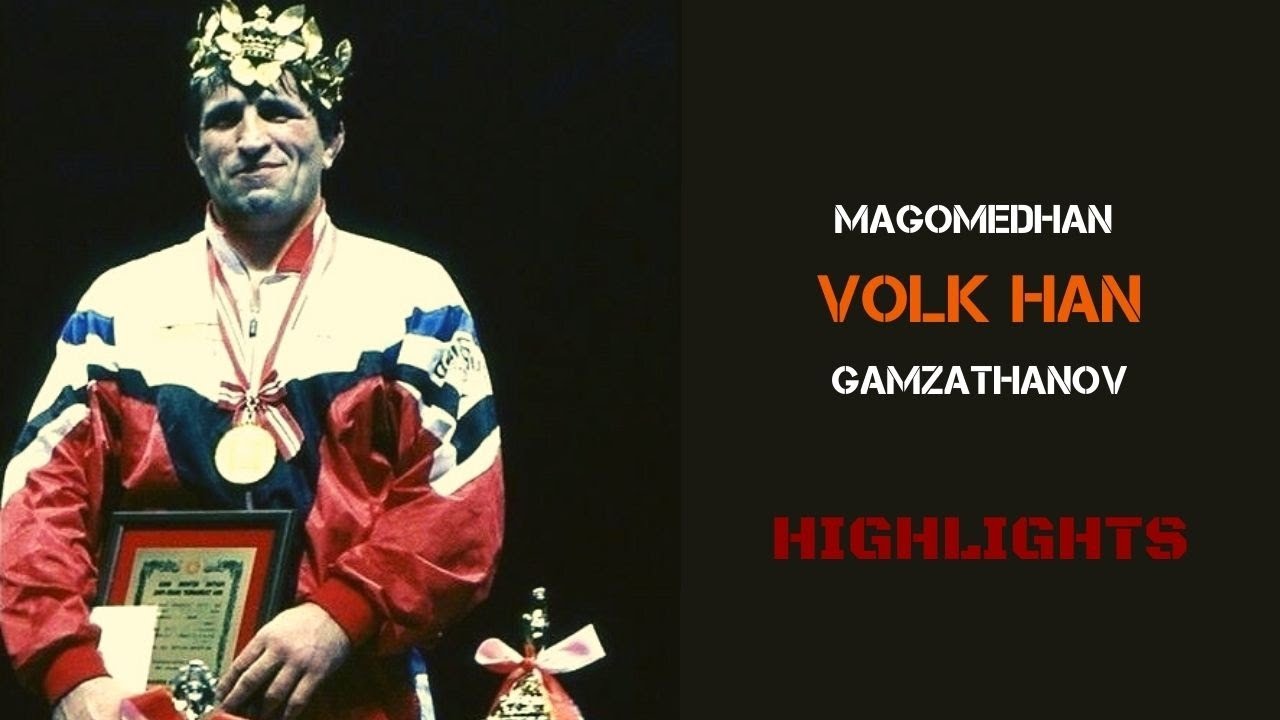
The Netherlands had guys like Alistair Overeem, his brother Valentijn, and Chris Dolman. Brazil had guys like Antonio Nogueira and Renzo Gracie. The US had the likes of Dan Henderson and Randy Couture. And of course, no combat sports organization would be complete without RUSSIANS, and RINGS had plenty, including Andrei Kopylov, Fedor Emilianenko, and the other man in this match, sambo master Magomedkhan Amanulayevich Gamzatkhanov, better known as Volk Han.
Han was a monster in the world of combat sports. He was known as The Russian Wolf for his strength and was also called “The Magician” by the Japanese press thanks to the incredible speed and fluidity with which he threw people to the mat and switched from one hold to another. He was seen as a freak athlete with this mixture of strength, technique, and speed. As a result, Tamura had his hands full, but if there was one thing that shootfighting has proven its that size isn’t everything.
The Match
There’s a long stare-down and then Han arm throws Tamura. Han goes for a cross armbreaker but Tamura gets a ropebreak. Both men trade kicks until Han takes Tamura down. Suddenly Tamura counters into his own cross armbreaker attempt but Han rolls into the ropes for another break. Han takes several hard kicks until he catches Tamura’s ankle and rolls into a heel hook. Tamura rolls over to lessen the pressure but then Han transitions into what looks like a shoot Figur-4 leglock/cobra clutch combo. Han switches to a double wristlock and Tamura escapes the arm hold but not the leglock at first but eventually wrestles free and goes for Han’s arm. Han tries another kimura but Tamura rolls to the ropes, forcing yet another break.
Tamura rocks Han with a kick and attempts a shoot suplex but Han grapples him down to the mat. Han blocks a heel hook with a crossface but Tamura frees himself and we get another stalemate until Han locks in another wristlock. After a pause Tamura blocks a discus chop and Han lands a kimura throw into what looks like some kind of torture pretzel hold. Han goes for another cross armbreaker but Tamura floats out and applies an armlock of his own. Han tries stopping a leglock but Tamura’s too quick for him and locks it in anyway. Han tries rolling to the ropes and rolling over to reverse the pressure but Tamura maintains his hold and tightens it until Han gets a ropebreak.
Tamura hits a big pump kick followed by a jump kick that really wakes up the crowd. Tamura tries another judo throw but Han counters into a sleeper/choke of sorts. Tamura escapes and both guys end up tied together like octopuses with Tamura worse for wear in some kind of figure-4 heel hook. Suddenly Tamura gets another cross armbreaker and Han lets go immediately.
Tamura peppers Han with calf kicks and Han drops to one knee. The ref begins a count since IIRC dropping down like that may lead to a decision in Tamura’s favor. Han fights on but Tamura drops him with another pump kick. Han gets up at seven and catches Tamura’s leg on another kick, only for Tamura to counter with a guillotine choke. Han gets a ropebreak and soon finds himself dangerously low on points.
Han locks in yet another cross armbreaker but Tamura gets a ropebreak. He goes for the arm again but this time surprises Tamura with a modified armlock instead, only for Tamura to counter that into an armbreaker of his own. Tamura stretches out Han’s arm but Han breaks free. Both guys trade heel hooks. Han traps Tamura in a bodyscissor of sorts until Tamura gets a ropebreak. Once both guys are standing Han drops Tamura with slaps/palm strikes. Tamura gets up, wrestles into a standing crossface, lands a brutal judo throw, and gets a full cross armbreaker applied. Han taps! Tamura wins!
Winner after 12:48: Kiyoshi Tamura
Review
This was a fun little cold match that’s all action and no story. It was closer to an MMA fight or a genuine amateur wrestling match than it is to the more drama-driven understanding of pro-wrestling but there’s still enough to enjoy here. The stereotypical “quiet but respectfully watching” Japanese crowd gave this the atmosphere of a legit combat sports contest. The commentators reacted to every counter and every submission hold like it was a big deal. There was no story beyond two competitors trying to win a contest. The point system that they showed on the screen from time to time added another layer of drama by showing that, over time, both men would eventually run out of options. With this added layer the match became as much a game of chess as it was a straightforward grappling exchange.
But beyond that straightforward direction there weren’t any other elements of spectacle, pageantry, or drama. The entertainment value came from watching the much smaller Tamura try and outfight the Russian who lived up to his Magician nickname and had control for most of the match. Though it was more of a shoot fight there was still an underdog element to Tamura trying to beat this Russian monster (which is a story that has been told and retold all over the world for decades). So even though it was basically a sport display and not a traditional wrestling match per se, there was still a pro-wrestling narrative about it that added drama to what could’ve otherwise been dismissed as a generic athletic display.
Final Rating: ***1/2
Even without any story, angles, or melodrama this was a fun way to spend thirteen minutes. This is especially true if you want to see something that blurs the line between pro-wrestling and MMA without giving it away whether it’s entirely one or the other. With much of wrestling becoming hokier since the 1980s, some fans have wanted to see more credible action elsewhere.
What’s more, those that’ve grown tired of the same old shtick from UFC or other MMA promotions might find something of value here since it’s a throwback to when MMA was much wilder, less structured, and harder to predict. There’s plenty of value in that, especially since stuff that’s harder to predict is, by and large, more entertaining for the viewer.
Thanks for reading.